Condensation vs leaks: how to tell the difference on commercial roofs
Practical guidance for surveyors and estates managers on telling condensation from genuine water ingress on metal and flat roofs.
Roof Surveys & DefectsMetal RoofingFlat RoofingBy TRS RoofingPublished 11 Nov 20266 min read
Introduction
As temperatures drop and rainfall increases, many estates teams start noticing damp patches, staining or water droplets on the underside of roofs. The immediate assumption is often a leak. In a lot of cases it is not. It is condensation.
Misdiagnosing the two is common, especially on metal and flat roofs, and it can lead to the wrong repairs being specified. Understanding the difference saves time, money and unnecessary disruption.
Why this becomes more common in colder months
Commercial roofs experience bigger temperature swings as autumn and winter set in. Warm moist air inside the building meets colder surfaces. When the surface temperature drops below the dew point, moisture in the air turns into water droplets. This is condensation.
On metal roofs the effect can appear quickly because metal conducts cold so efficiently. On flat roofs it often shows up around insulation edges, penetrations, or where ventilation is poor.
A genuine leak, by contrast, is water that has entered from outside through a failed joint, detail, membrane or sheet.
Typical signs of condensation
Water droplets or fine misting on the underside of the roof sheets or deck
Dampness that appears even when it has not been raining
Problems that are worse in the morning or after a cold night
Staining or moisture that is relatively even across large areas
Issues that improve when the building is better ventilated or heated more consistently
No clear entry point visible on the external roof surface
Condensation is often linked to high internal humidity, limited ventilation, or a roof build-up that allows warm air to reach cold surfaces.
Typical signs of a leak
Water ingress that appears or worsens during or shortly after rainfall
Localised staining or dripping that lines up with a specific external detail
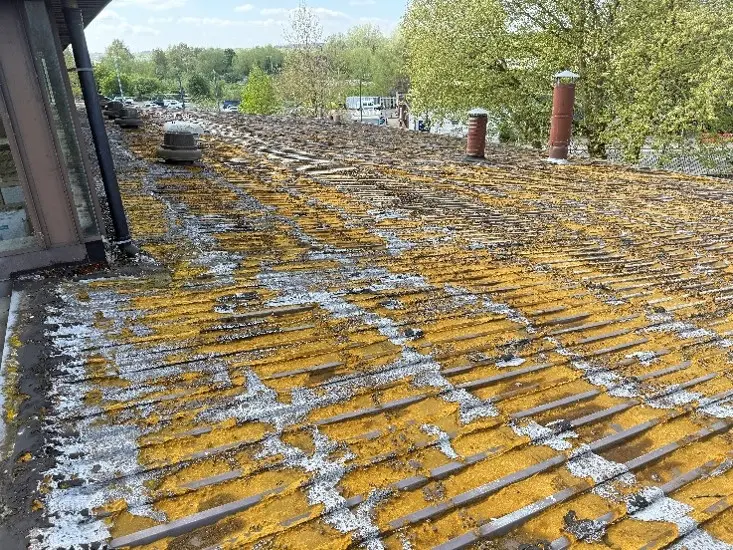
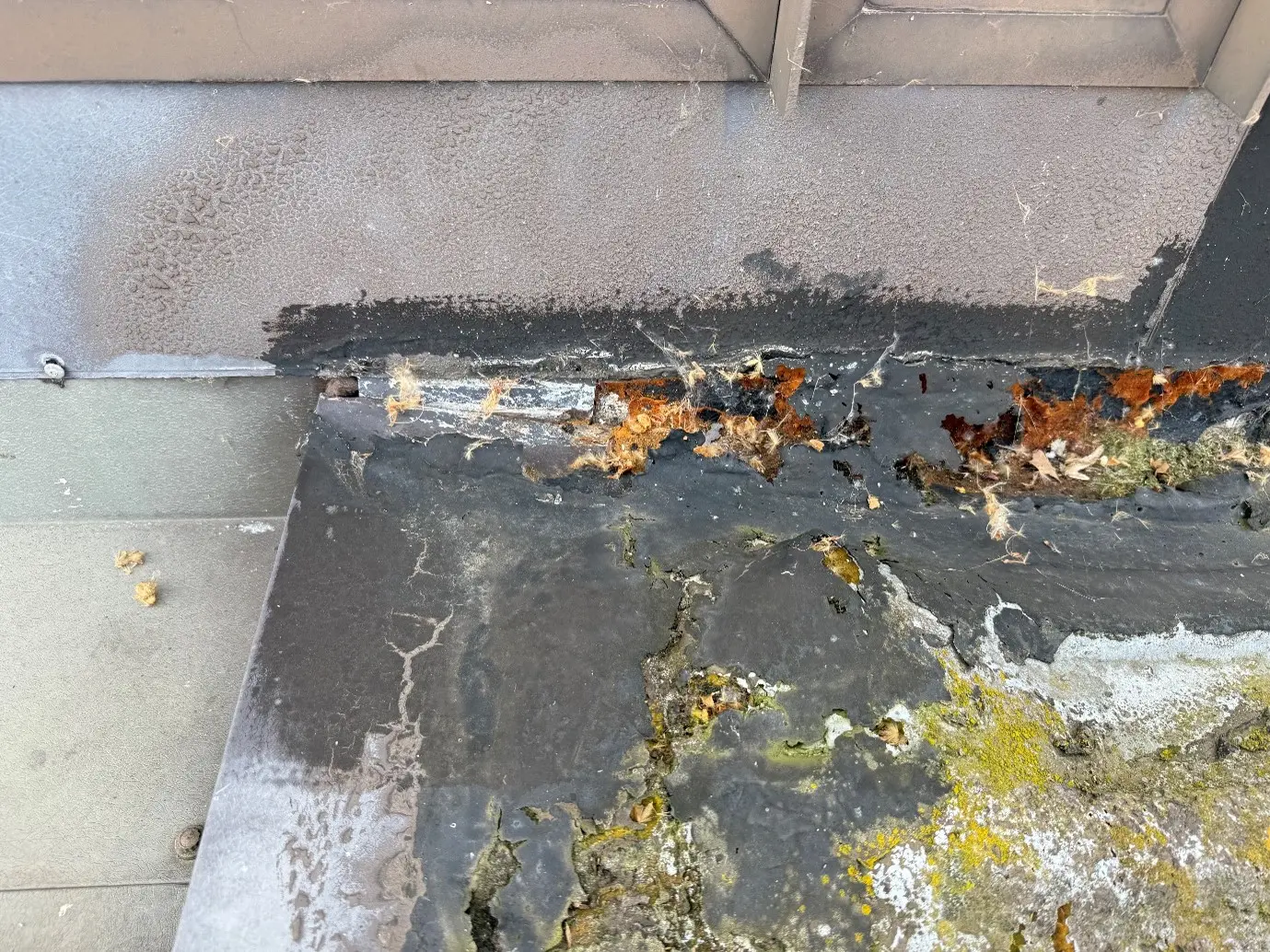
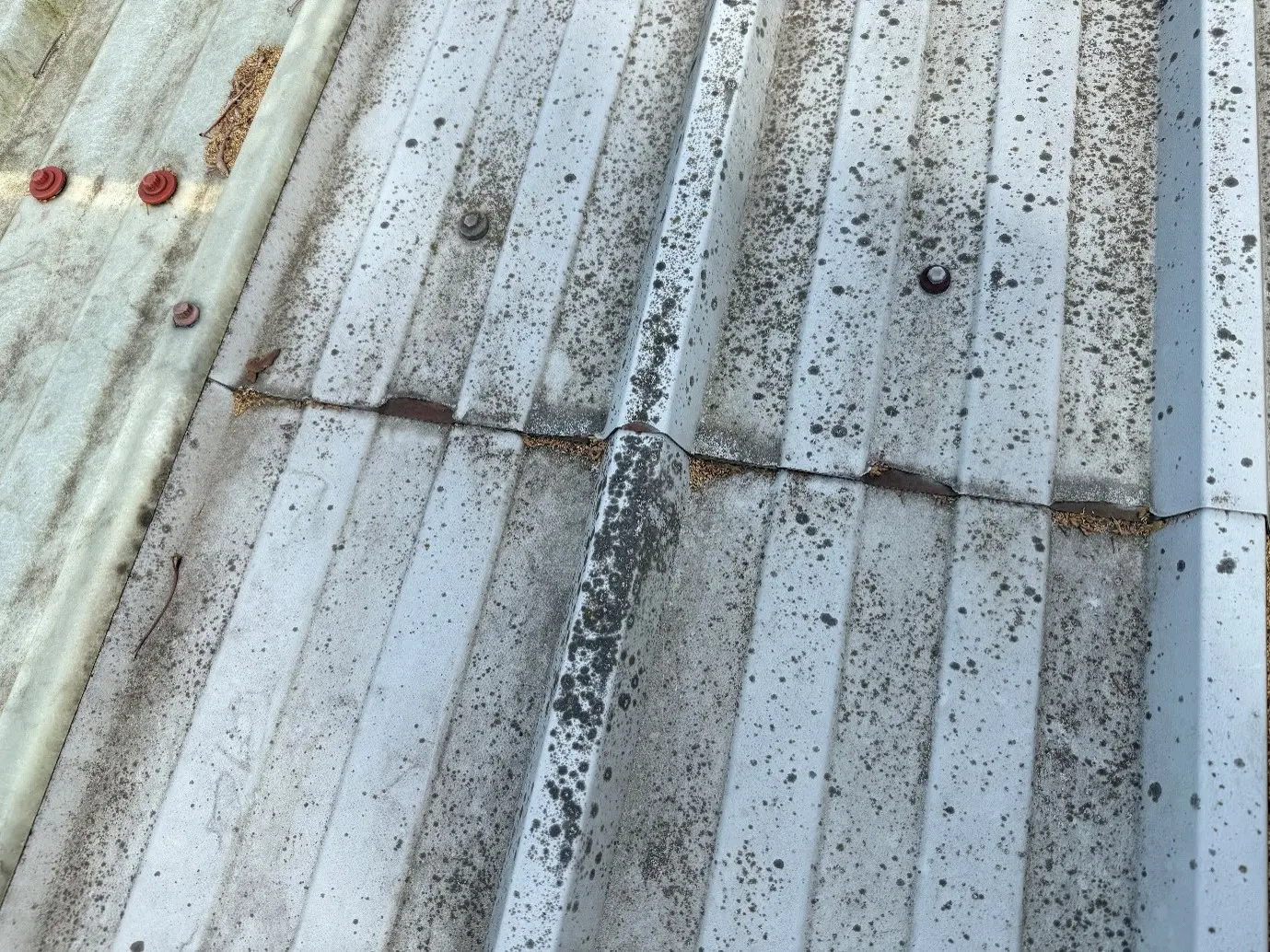
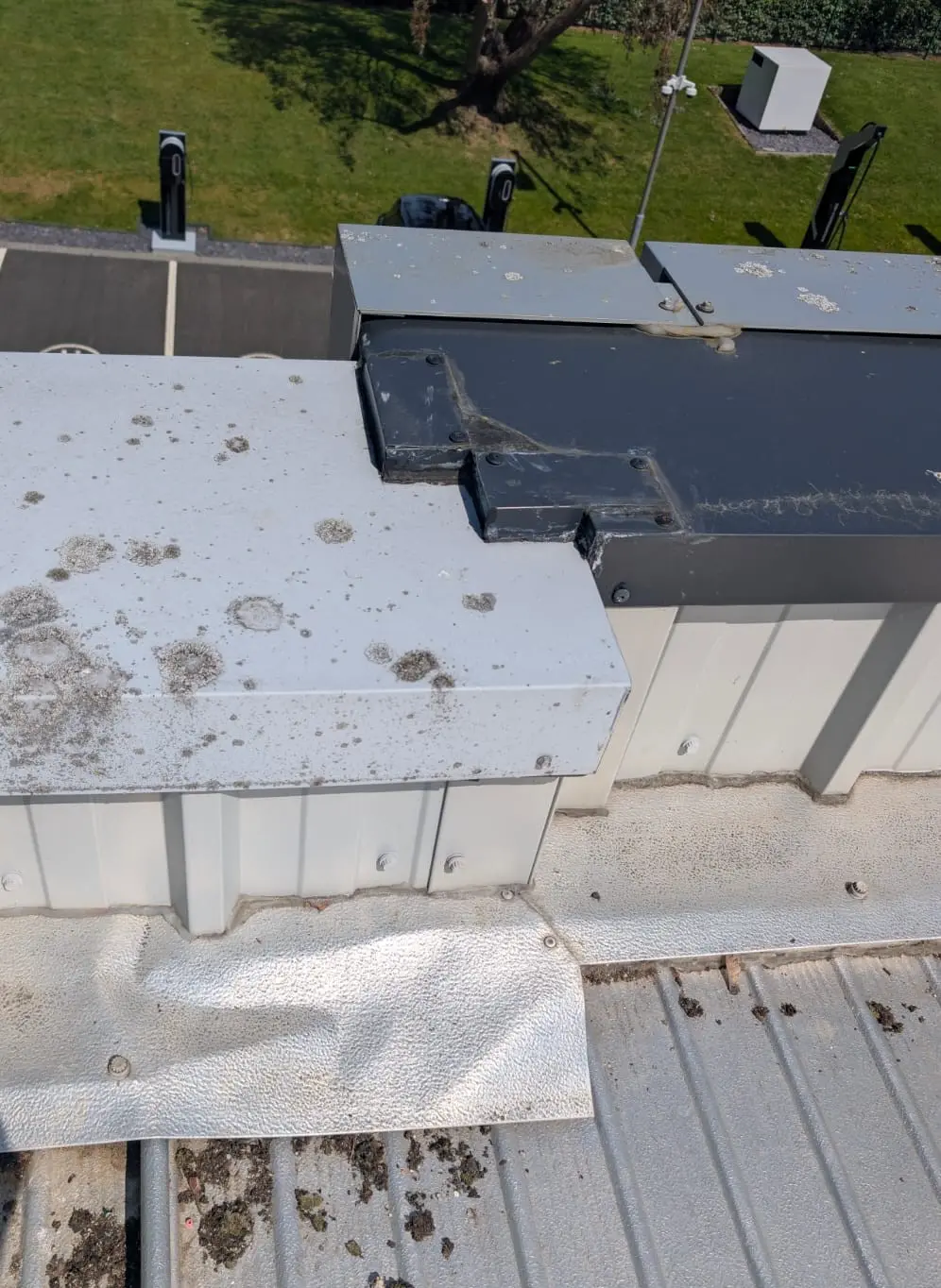
Visible damage, open joints, failed sealant, backed-out fixings or membrane splits on the roof surface
Water that continues even when internal conditions are dry and well ventilated
Damage that tracks along structural elements or appears in the same place repeatedly
Leaks are driven by weather. Condensation is driven more by the difference between internal and external conditions.
Why the distinction matters
Treating condensation as a leak often leads to unnecessary external repairs. New sealant, patches or even sections of covering can be installed while the real issue continues. The dampness returns and the cycle repeats.
Treating a genuine leak as condensation is equally problematic. Water continues to enter the building, insulation becomes saturated, and the long-term damage increases.
Accurate diagnosis protects both the building and the budget.
What a proper assessment should include
A good inspection looks at both the external roof and the internal environment. Key points usually include:
External condition of sheets, membranes, joints, penetrations and drainage
Evidence of water tracking or entry points
Internal humidity levels and ventilation
Roof build-up and whether a vapour control layer is present and effective
Patterns of staining or moisture relative to weather and building use
In many cases a visual inspection, moisture metering and an understanding of how the building is used will give a clear picture. Core samples or more detailed investigation may be needed on older flat roofs.
Practical advice for estates managers and surveyors
Do not assume every damp patch is a roof leak, especially in colder weather
Note whether the problem appears in dry spells or only after rain
Check whether the issue is widespread or tightly localised
Consider internal conditions as well as the roof covering
Avoid repeated temporary patches until the cause is properly identified
Getting this right early reduces emergency call-outs and helps plan the correct long-term solution, whether that is improved ventilation, a vapour control layer, targeted repairs or a full roof upgrade.
Need a second opinion?
If you are seeing recurring dampness on a commercial or industrial roof and are unsure whether you are dealing with condensation or water ingress, a focused condition survey can usually settle the question quickly.
We regularly help surveyors and estates teams distinguish between the two so the right works are specified first time.
Get in touch for a practical discussion about a specific building.