
Education sector
Roofing for schools, academies and education estates
A school roof project is rarely limited to the roof. Pupils and staff are usually in the building, access has to be controlled, and the programme is shaped by term dates, exams and the rooms directly below the work.
TRS works with school and college estates teams, multi-academy trusts, universities and their surveyors on survey-led refurbishment and replacement. The scope, the system and the phasing are set by what the survey finds and how the building is used, not by a standard template.
What shapes a school roof project
Four constraints usually decide how the work is planned before any system is specified:
Safeguarding and controlled access
Site access, sign-in, escorting and separation from pupils are agreed with the school or trust before mobilisation. Enhanced DBS checks are arranged for site personnel where the school, trust or contract requires them.
Term-time and holiday programming
Some scopes suit a holiday possession; others can proceed in term time when the working area can be fully isolated. Which applies is set by the roof, the building layout and the agreed programme, not by a fixed rule.
Occupied teaching space
Noise, dust, deliveries and hot works are planned around the timetable, exams and the rooms directly below. Where activity cannot be relocated, the works are phased or the sequence changes.
Early survey and budget information
Access routes, compound locations, temporary protection and phasing all depend on survey findings. The earlier that information exists, the more realistic the programme and the budget.
How TRS plans delivery on a live school site
Planning starts with the survey rather than the scaffold. Once the build-up, the defects and the moisture position are understood, the phasing is built around the school's use of the building: which areas can be released, when, and for how long.
Site set-up is planned to keep construction and school activity separate. Compound and storage positions, pedestrian and vehicle routes, and hoarding or fencing lines are agreed with the school before work starts. They are then reviewed as the work moves across the roof.
Where TRS is appointed as Principal Contractor, we hold those CDM duties and issue a construction phase plan covering access, protection, noise and dust controls and emergency arrangements. Where another Principal Contractor is appointed, we work within their arrangements instead.
Communication is deliberately routine: an agreed point of contact, short written updates at a frequency the school chooses, and advance notice of anything noisy, disruptive or requiring temporary closure below the work.
Repair, coat, overlay, over-clad or replace?
Estates teams, business managers, surveyors and consultants usually want a recommendation they can defend. These are the six things TRS needs to establish before making one:
What is the existing build-up?
Deck type, insulation, membrane or sheet profile and any previous overlays determine whether coating, overlay, over-cladding or replacement is even available as an option.
Is there trapped moisture?
Wet insulation rules out most overlays. Moisture testing or core sampling is undertaken or coordinated by TRS where appropriate to answer this before a scope is fixed.
How long does the roof need to last?
A five-year holding position and a thirty-year replacement lead to very different specifications. Knowing the estate strategy avoids specifying the wrong one.
What possession is realistically available?
Holiday dates, exam periods, decant options and whether rooms below can be emptied set the phasing before the system is chosen.
What sits below and above the roof?
Labs, IT rooms, halls, plant and services below, and rooftop plant or PV above, all affect protection, access and the sequence of work.
What funding and approvals apply?
Condition funding, capital programmes and internal approval dates shape whether the work is a single scheme or phased across years.
If some of that information does not exist yet, a roof survey and condition report is the quickest way to get it.
Education projects
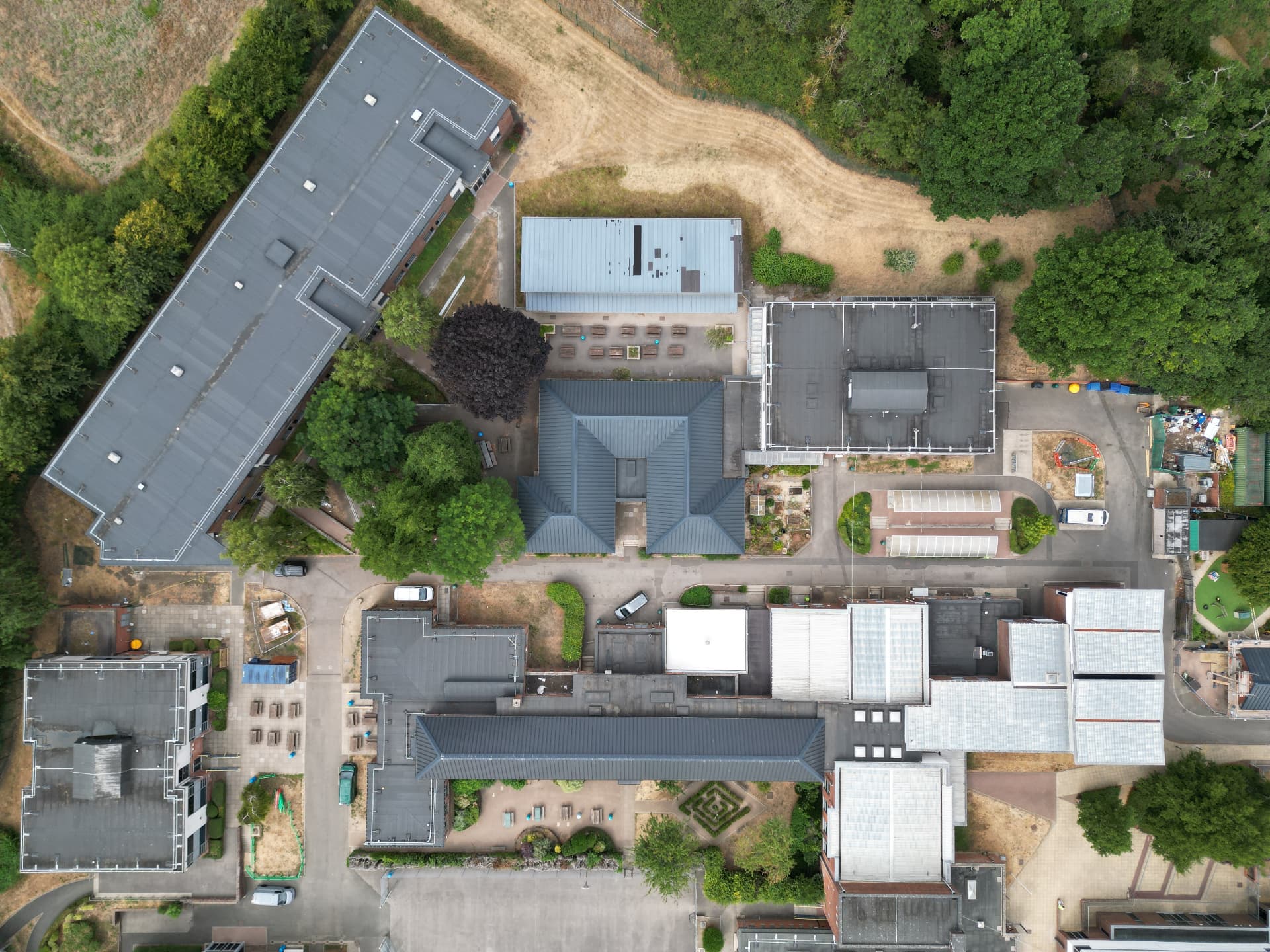
Kingsbury Green Academy
Calne, Wiltshire SN11 8YH
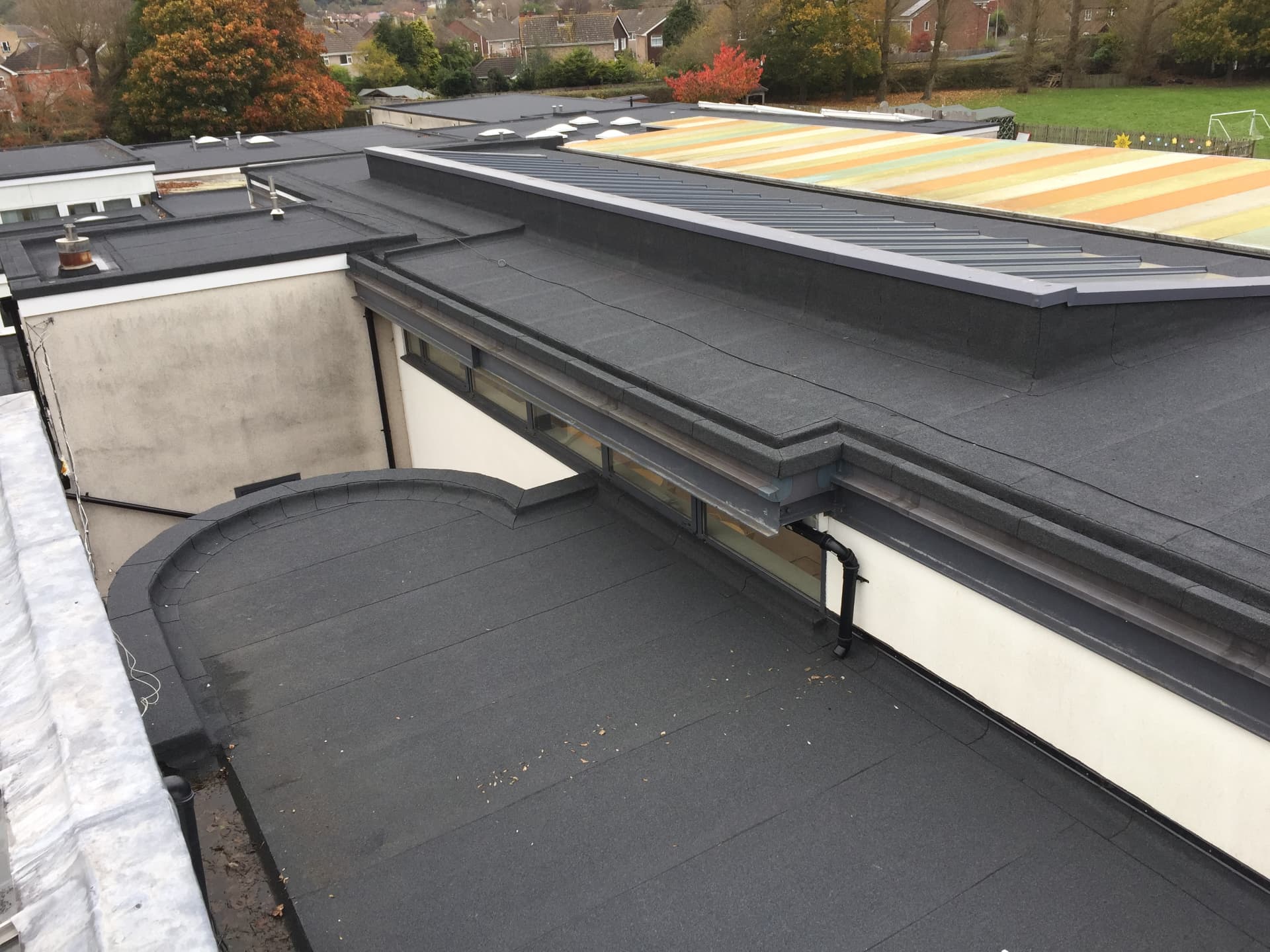
Yeo Moor School Flat Roof Refurbishment – Clevedon
Clevedon
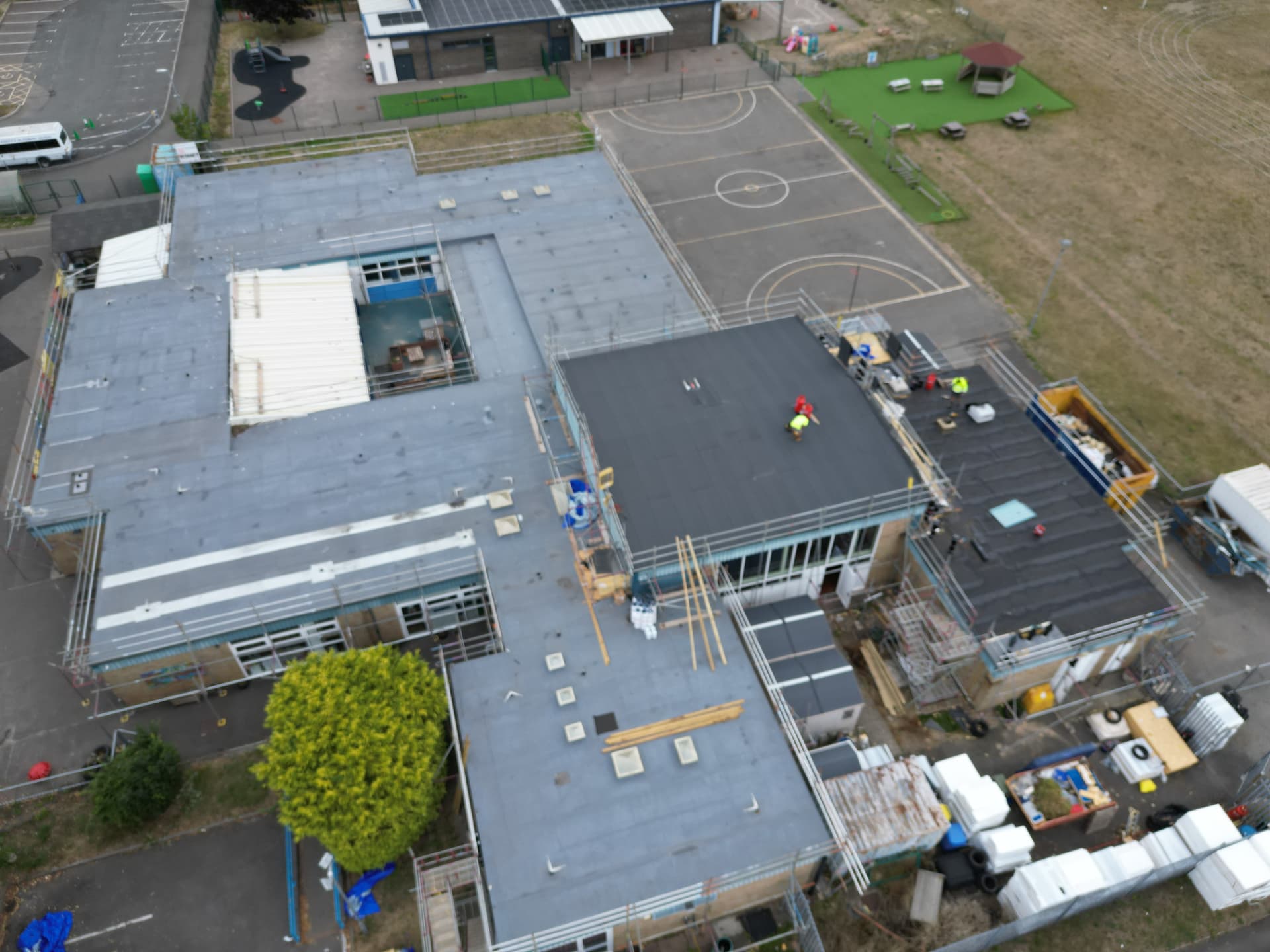
St Josephs Primary School Flat Roof Refurbishment – Penarth
Penarth, Vale of Glamorgan
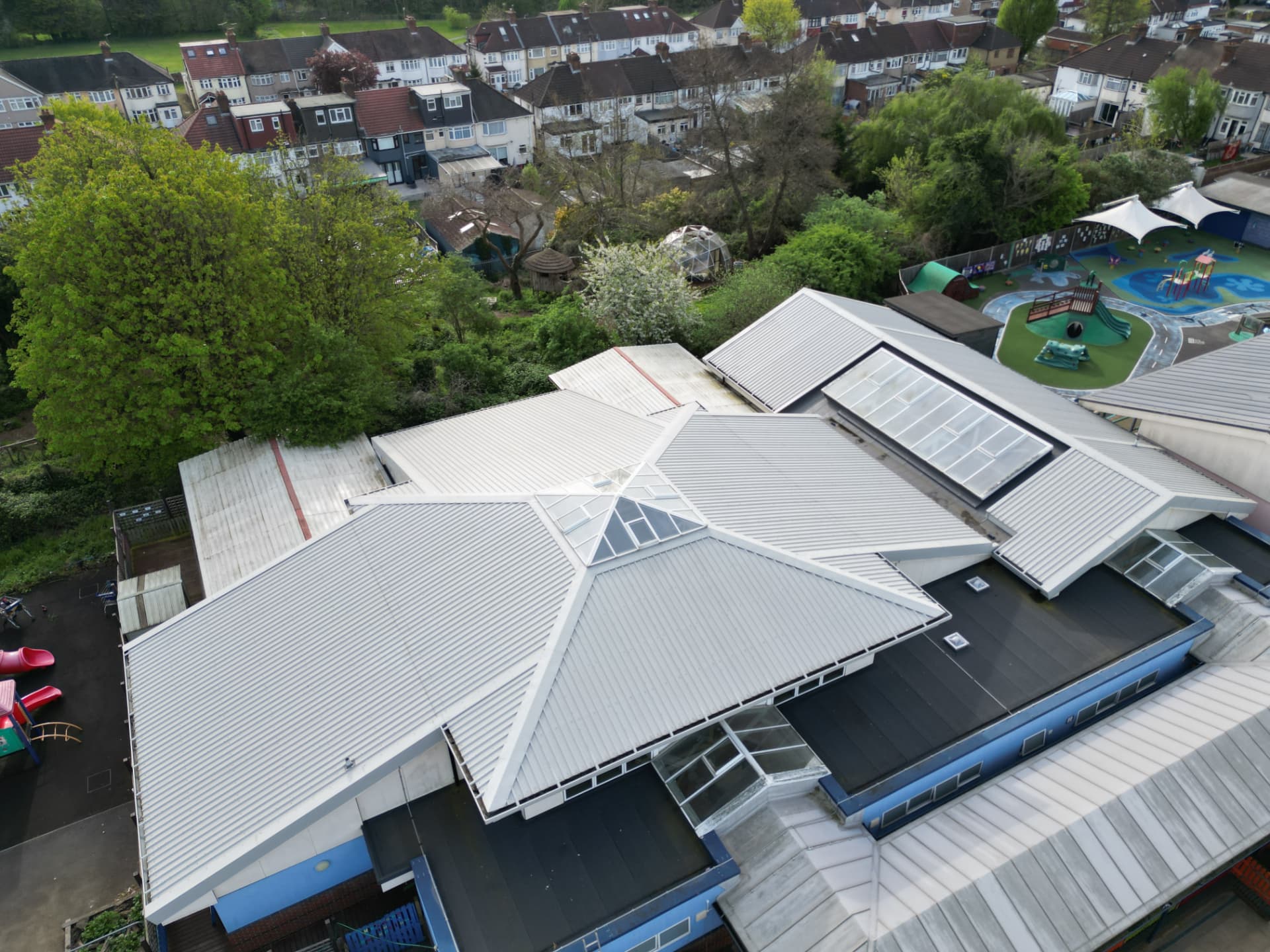
Oakington Manor Primary School Roof Replacement – Wembley
Wembley, London
Roofing work most often needed on education buildings
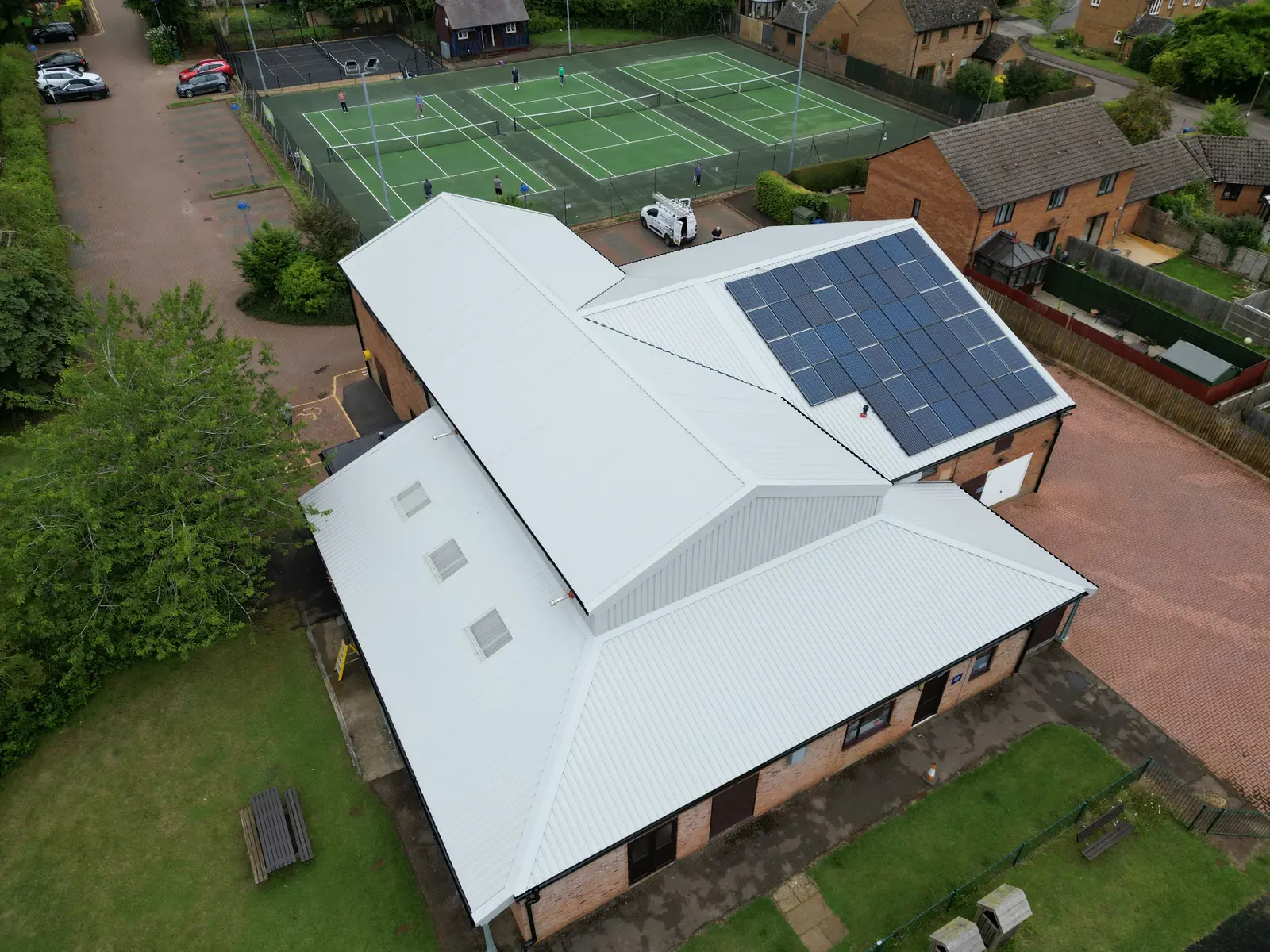
Roof Surveys
Condition surveys that record the build-up and defects alongside access constraints, safeguarding rules and available possession windows.
View service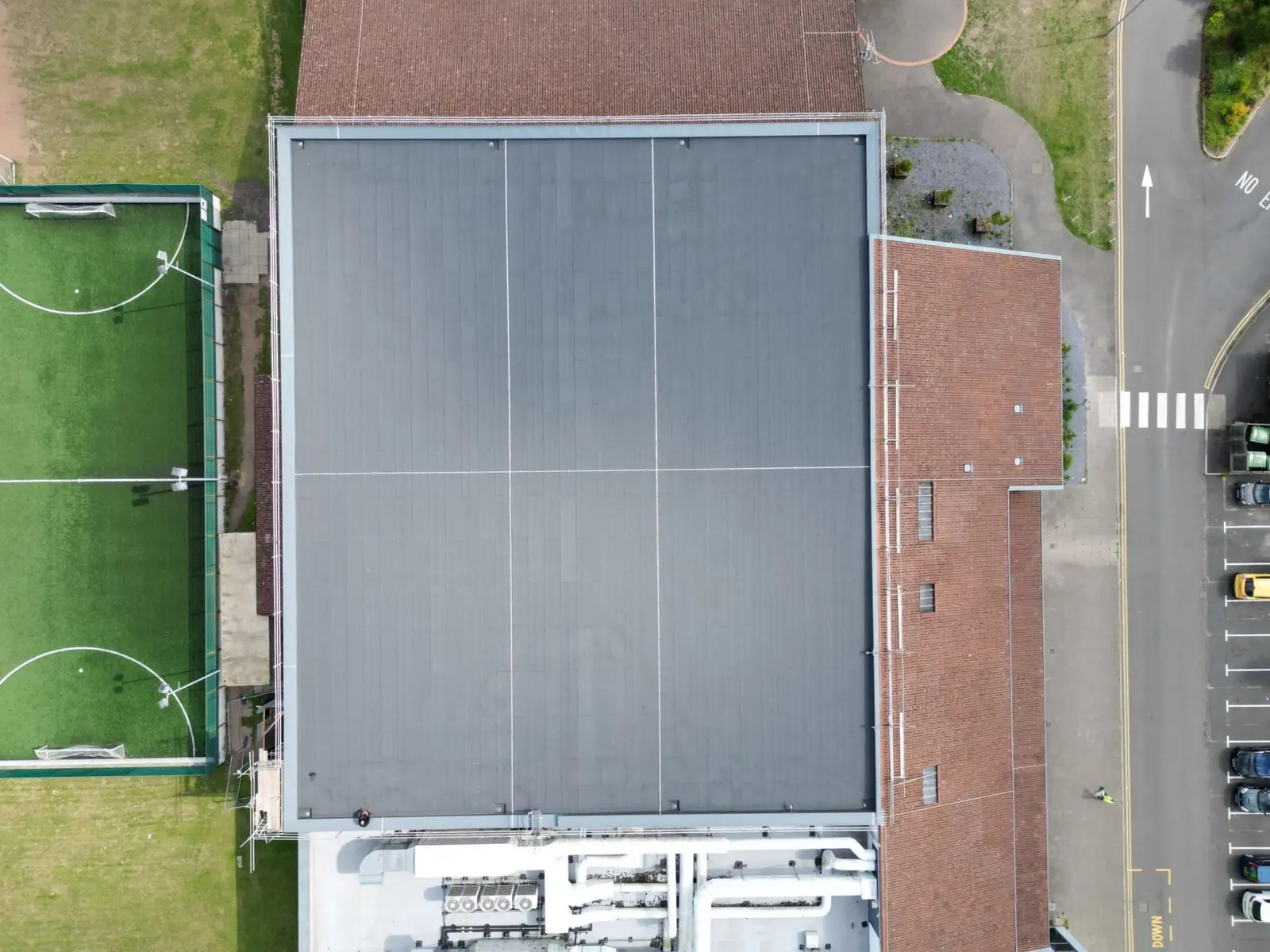
Flat Roofing
Overlay or replacement on flat and low-pitch roofs over teaching blocks, halls and link corridors, sequenced so each area is weathertight before the next opens up.
View service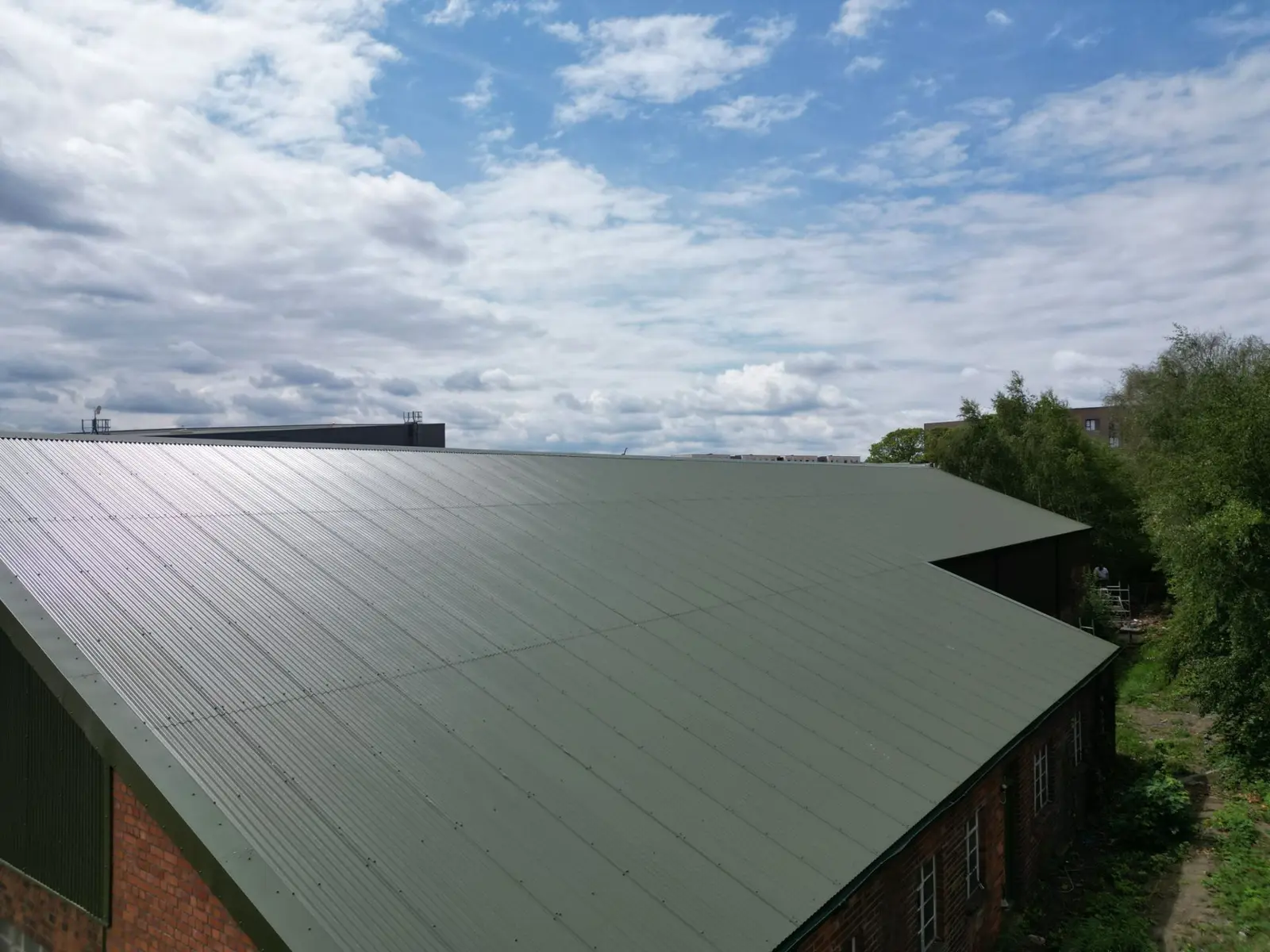
Metal Roofing
Cut-edge corrosion treatment, sheet replacement and over-cladding on sports halls, workshops and later-phase teaching blocks.
View service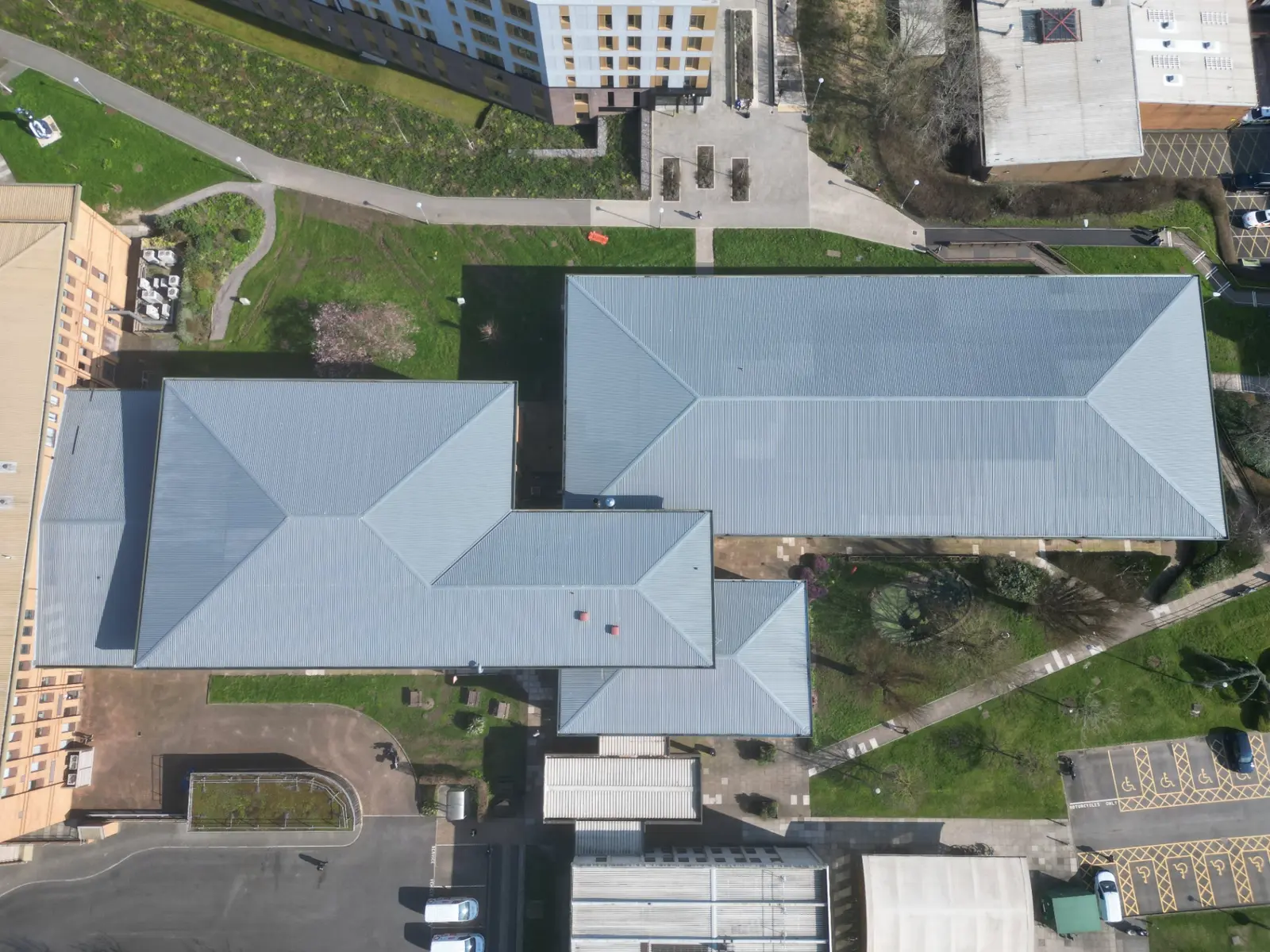
Roof Coating Systems
Liquid-applied and coating options where the existing sheet or membrane is sound and life extension is the objective.
View service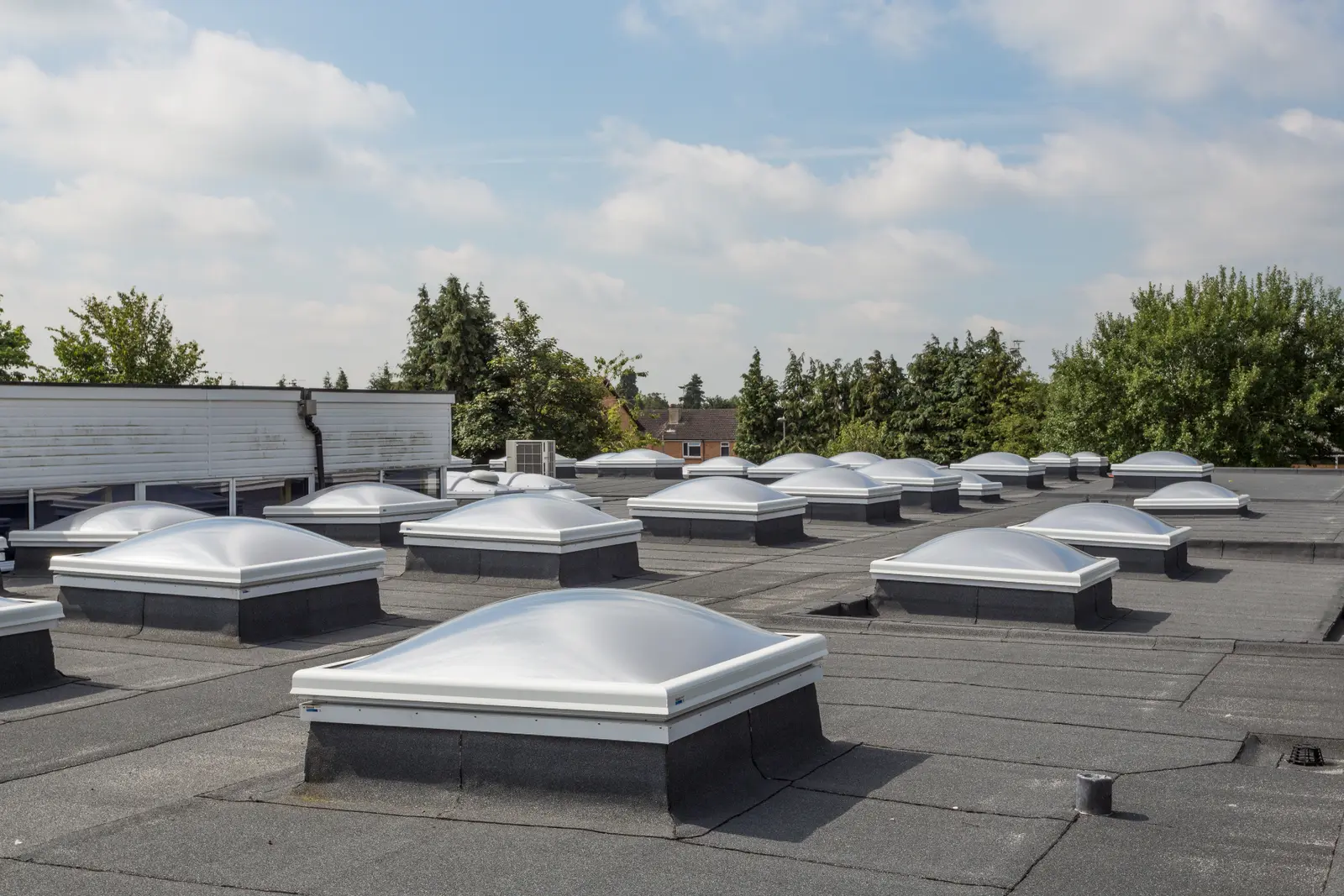
Rooflights
Replacement, over-sheeting or protection of aged rooflights, which are often the most fragile part of a school roof.
View service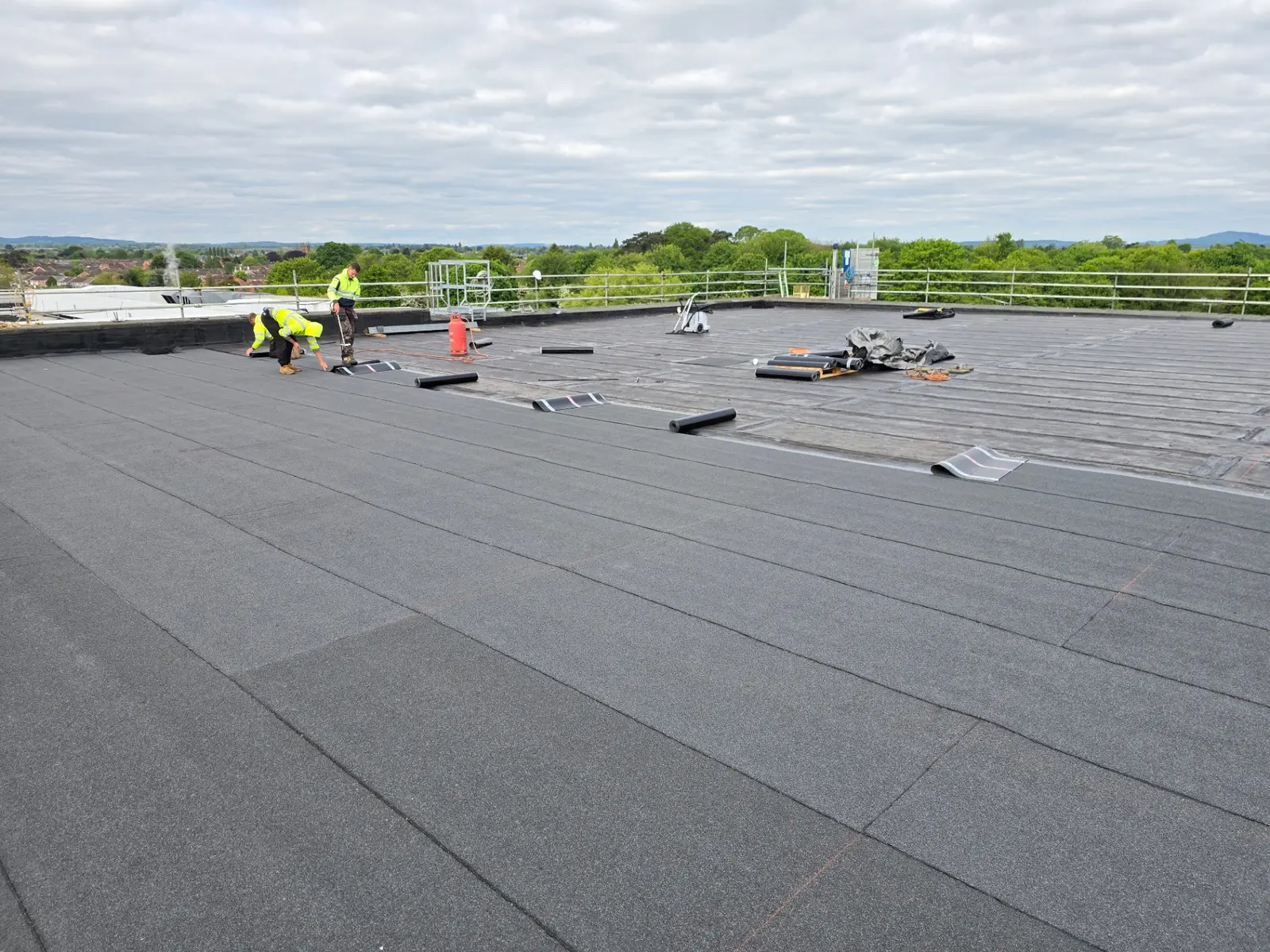
Roof Maintenance & Repairs
Planned maintenance and reactive repairs that keep a serviceable roof stable while a larger scheme is funded.
View service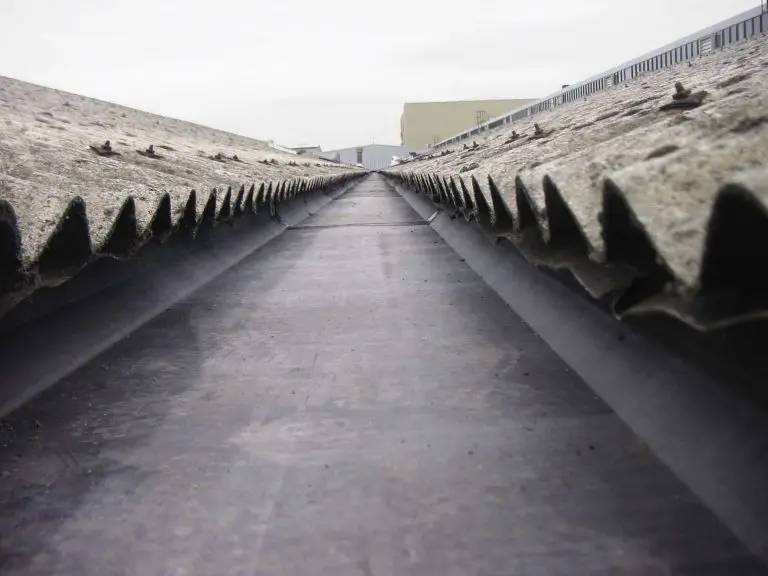
Gutters & Rainwater Systems
Gutter lining, outlet and downpipe works where internal water damage is traced to rainwater goods rather than the covering.
View service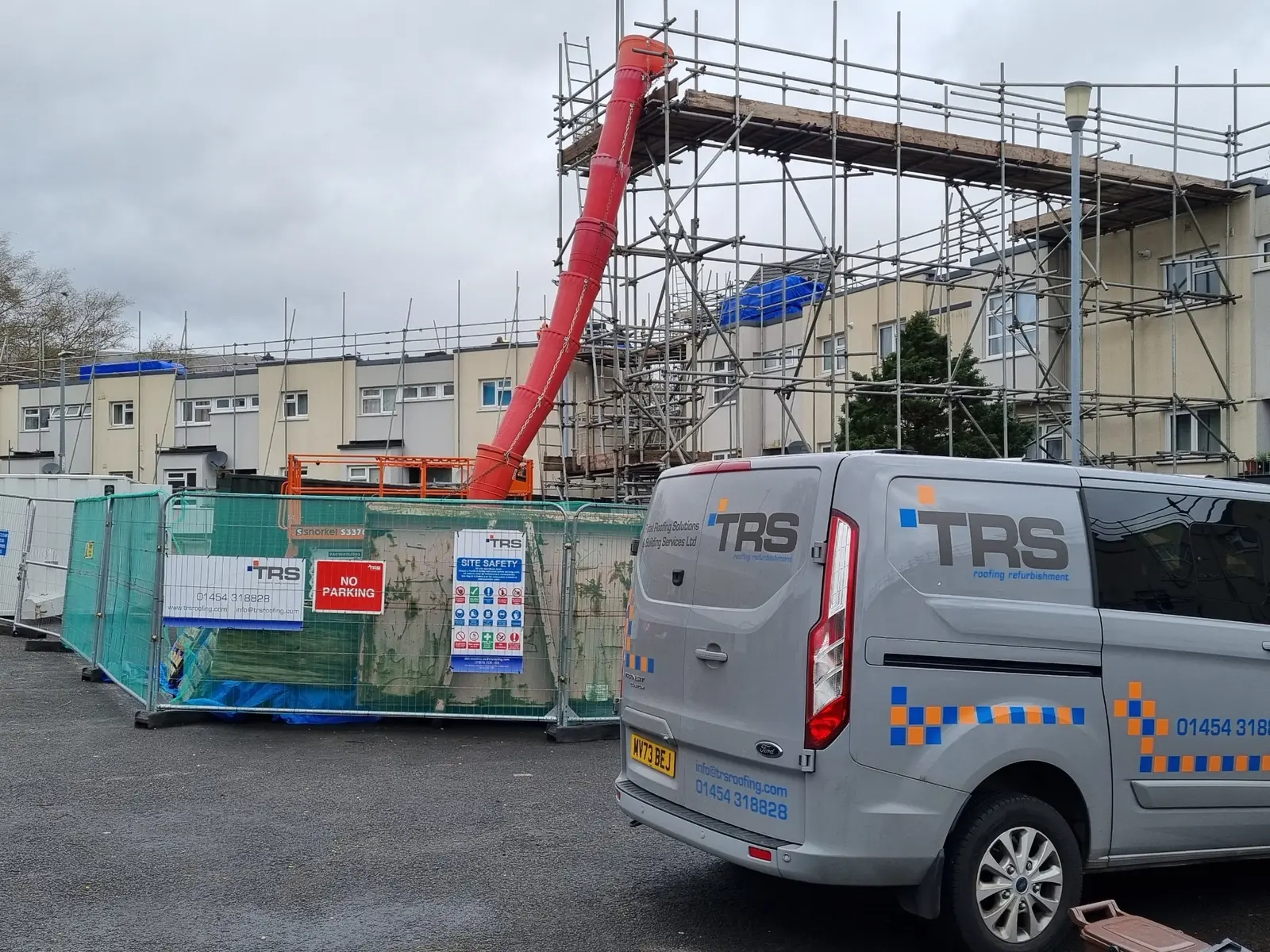
Associated Building Works
Fascias, soffits, temporary protection and minor builders work carried out with the roofing scope rather than as separate building work.
View service
Guidance for education roof projects
Technical articles written for the constraints surveyors and estates managers actually face on school buildings.
The Commercial Roof Decision Framework
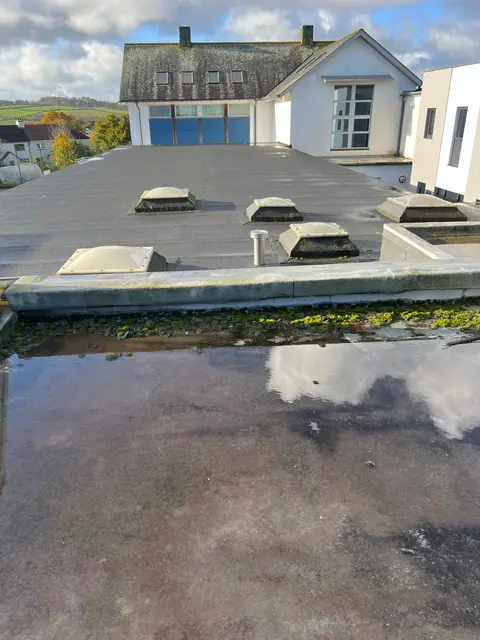
A practical framework for deciding when to repair, when to refurbish and when to replace a commercial roof, based on condition and risk rather than age.
Keeping schools open during roof works: phasing and safeguarding
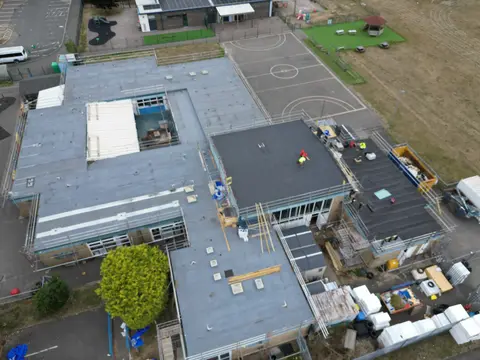
Working on live school sites can be one of the most challenging environments for a contractor. The building has to stay open, children and staff have to be protected, and most often the programme has to fit around the school holidays.
Education roofing questions
That depends on the school or trust's own requirements and the arrangements agreed for the site. Where enhanced DBS checks are required for site personnel, TRS arranges them before mobilisation and confirms the position in writing. Where access is fully segregated from pupils, schools sometimes set different requirements.
Not always. Holiday possession suits scopes that need large open areas or work directly above occupied rooms. Other works can proceed in term time where the area can be isolated, access kept separate and noise and dust controlled. The approach is agreed case by case.
In many cases yes, subject to the agreed programme and the phasing that the roof allows. Some scopes require rooms below to be closed for short periods. We identify those areas at survey stage so the school can plan rather than react.
Disruption is planned rather than eliminated. Working hours, delivery times, noisy operations and hot works are set against the timetable, and the areas affected are agreed in advance so the school knows what to expect and when.
Where TRS is appointed as Principal Contractor we take on those CDM duties, including the construction phase plan, site controls and coordination of our supply chain. On other projects TRS works under a separate Principal Contractor and integrates with their arrangements.
As early as the estate strategy allows. Fixed possession windows mean survey, specification, funding approval and contractor availability all have to line up, and that sequencing is easier with months rather than weeks.
Beyond condition and build-up: available possession windows, exam dates, rooms that cannot be closed, mandatory access and egress routes, safeguarding arrangements, and compound and storage constraints.
Often, where the covering is broadly serviceable and the defects are localised. Planned maintenance and targeted repair can be a deliberate holding strategy, but it is worth deciding that consciously rather than by default.
Education roof refurbishment
Planning school roof works?
Whether you need a condition assessment, a second opinion on a proposed scope, or a realistic figure for a capital plan, TRS can provide a survey-led recommendation that accounts for safeguarding, possession windows and budget.