
Commercial property
Roof works on commercial property and managed estates
Offices, retail units, leisure buildings, business parks and mixed-use property share a particular problem: the roof sits directly above people who are working, shopping or visiting, and the building has to keep functioning while it is repaired.
TRS works with managing agents, facilities teams, landlords, tenants and building surveyors on roof repair, refurbishment and replacement in occupation, with the evidence needed to justify the scope and the phasing needed to keep the building open.
What shapes a commercial roof project
The technical work is often the straightforward part. The constraints around it set the programme:
Entrances, customer routes and car parks have to stay usable, so scaffold protection, exclusion zones and delivery slots are agreed before mobilisation.
A leak lands in someone's office, shop or leisure space. Occupied areas below drive both the urgency and the order in which roof zones are tackled.
Leases, planning conditions and centre management often restrict working hours, so noisy operations have to be programmed into the windows permitted.
Roof levels are usually crowded with plant, terraces and rooflights, and access is frequently through tenanted space or shared risers.
How TRS approaches commercial roofs
Recommendations are made on survey evidence, not on a preferred product. Moisture surveys and core samples establish whether an overlay is genuinely appropriate, whether insulation can be retained, and what guarantee options the substrate will support. Where a targeted repair is the right answer for now, we will say so and set out when the larger project should be budgeted.
TRS is a roofing contractor rather than a property adviser. We report on roof condition, defects, options and cost; interpretation of lease obligations, dilapidations liability and valuation stays with your surveyor or legal team.
Where TRS is appointed as Principal Contractor, CDM duties, public protection, working hours and documentation are managed directly, and handover records and any applicable system guarantee are issued for the asset file.
Working on an occupied commercial building
Most commercial roof works are delivered while the building keeps trading. Disruption is planned and communicated rather than eliminated:
Zoning and phasing
The roof is split into zones so each area is opened and closed weather-tight within the working window, with the sequence set by what sits directly below.
Occupier communication
Managing agents, landlords and occupiers receive the programme, working hours, noise expectations and access requirements in advance, with a single point of contact for changes.
Public and pedestrian protection
Scaffold fans, protected walkways, signage and controlled deliveries are set out in the construction phase plan where TRS is appointed as Principal Contractor.
Presentation and reinstatement
Compounds, welfare and material storage are located to keep frontages and customer approaches presentable, with finishes and landscaping reinstated on completion.
Overlay, refurbish or replace? What we need to know first
For property and facilities managers, landlords, tenants and their surveyors, the roofing decision usually rests on six things:
How long the building needs to perform
A five-year hold before disposal, a lease event or a long-term asset plan point to different scopes. The intended horizon should set the specification, not the reverse.
Whether the existing build-up is dry
Moisture surveys and core samples establish whether insulation and deck can be retained. An overlay onto wet insulation transfers a problem forward rather than solving it.
What sits below each area
Server rooms, trading floors, retail units and plant rooms all change tolerance to risk, which changes phasing and temporary weathering requirements.
Access and possession available
Crane or hoist positions, permitted hours and roof access through tenanted space determine which systems can realistically be installed.
Lease and dilapidations context
Roof condition evidence often feeds service-charge, acquisition or dilapidations discussions. TRS reports on roof condition and costed options; the property and legal interpretation stays with your surveyor or adviser.
Budget and lifecycle planning
Where funding is staged, planned maintenance and targeted repair can hold a roof while a larger scheme is budgeted. Our report says which roofs can wait and which cannot.
Services most often delivered on commercial property
Flat Roofing
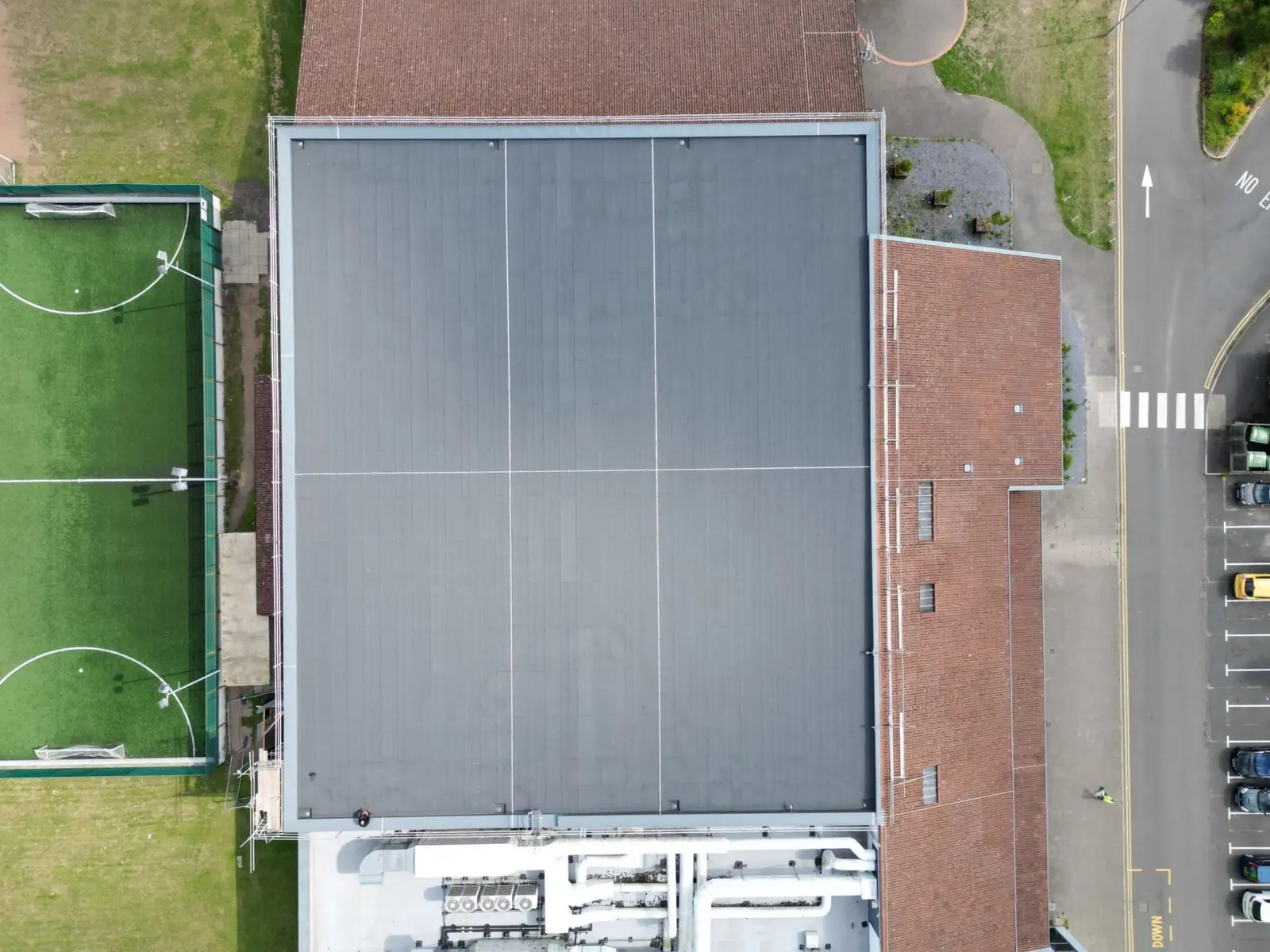
Single ply, felt and hot melt refurbishment or overlay on office, retail and leisure roofs, with insulation upgrades where the build-up allows.
View service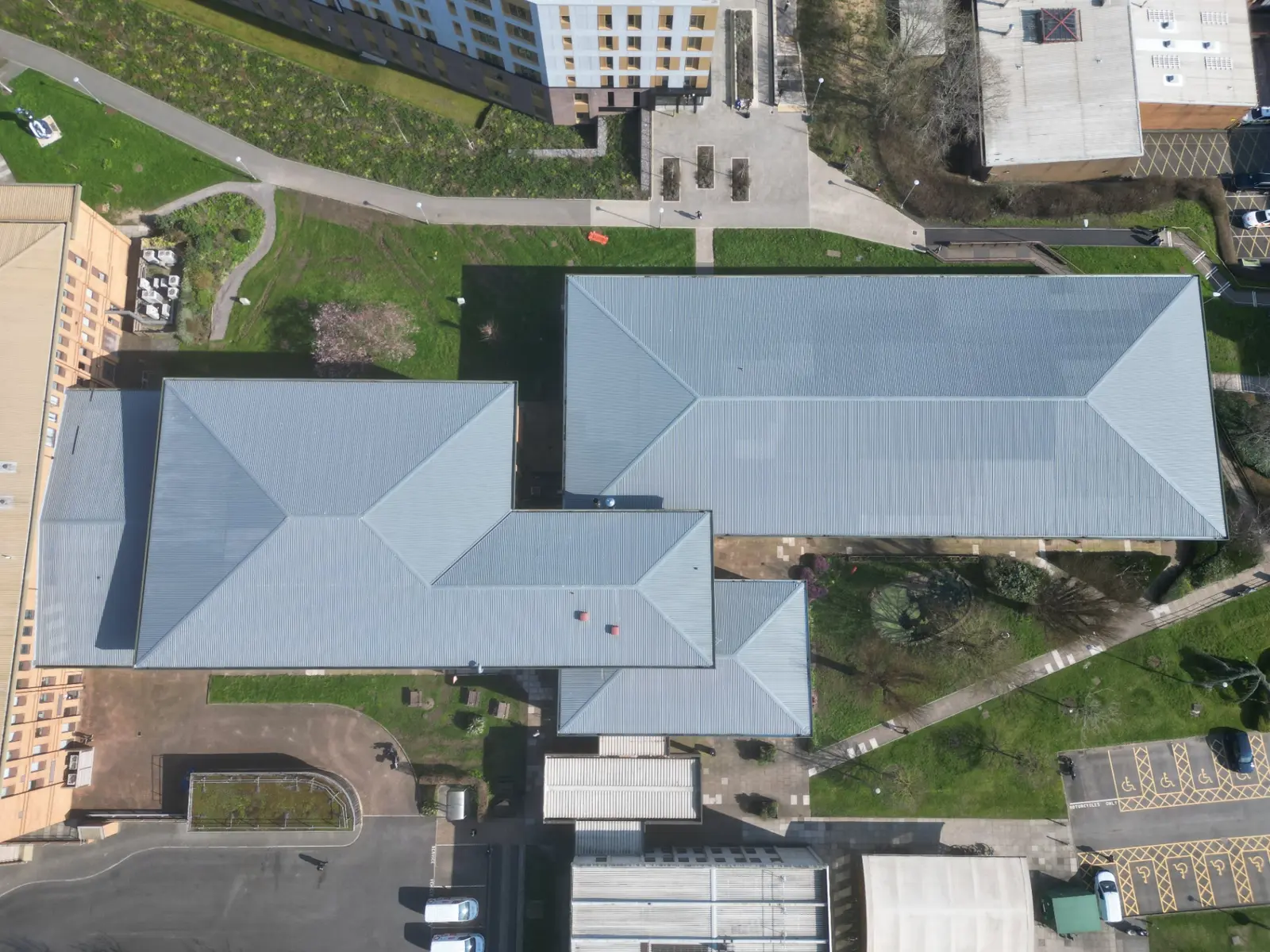
Roof Coating Systems
Liquid-applied systems for complex detailing, plant areas and roofs where a full strip is not viable in occupation.
View service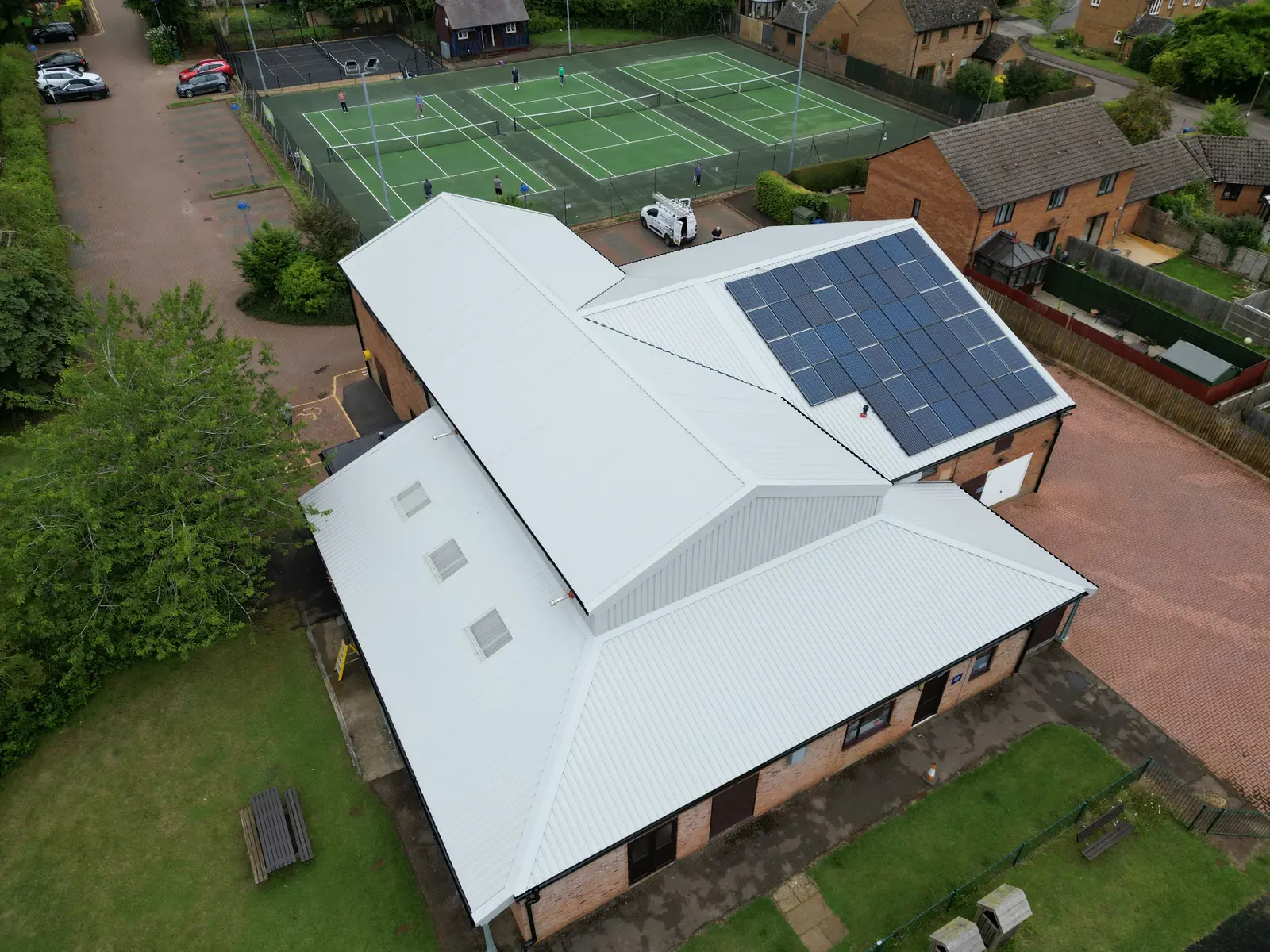
Roof Surveys
Condition and moisture surveys with costed options, useful for planned maintenance budgets and lease-event discussions.
View service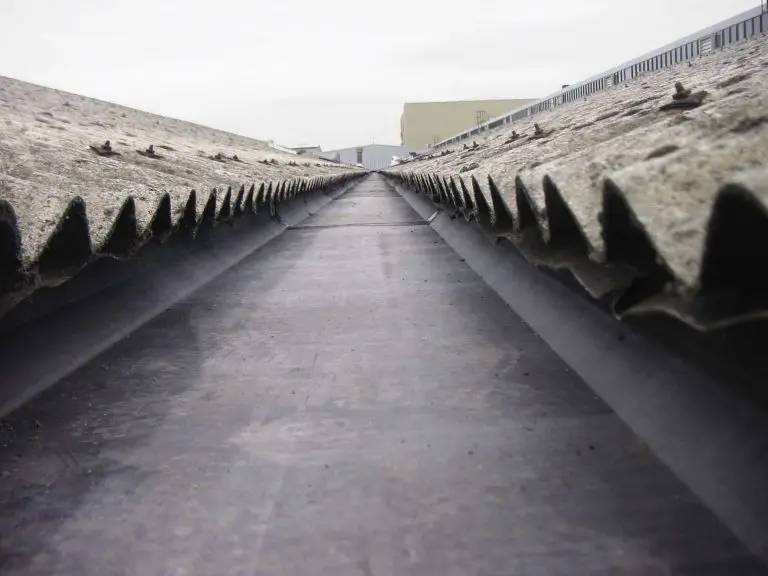
Gutters & Rainwater Systems
Gutter lining, replacement and outlet upgrades to remove a frequent source of leaks into occupied space.
View service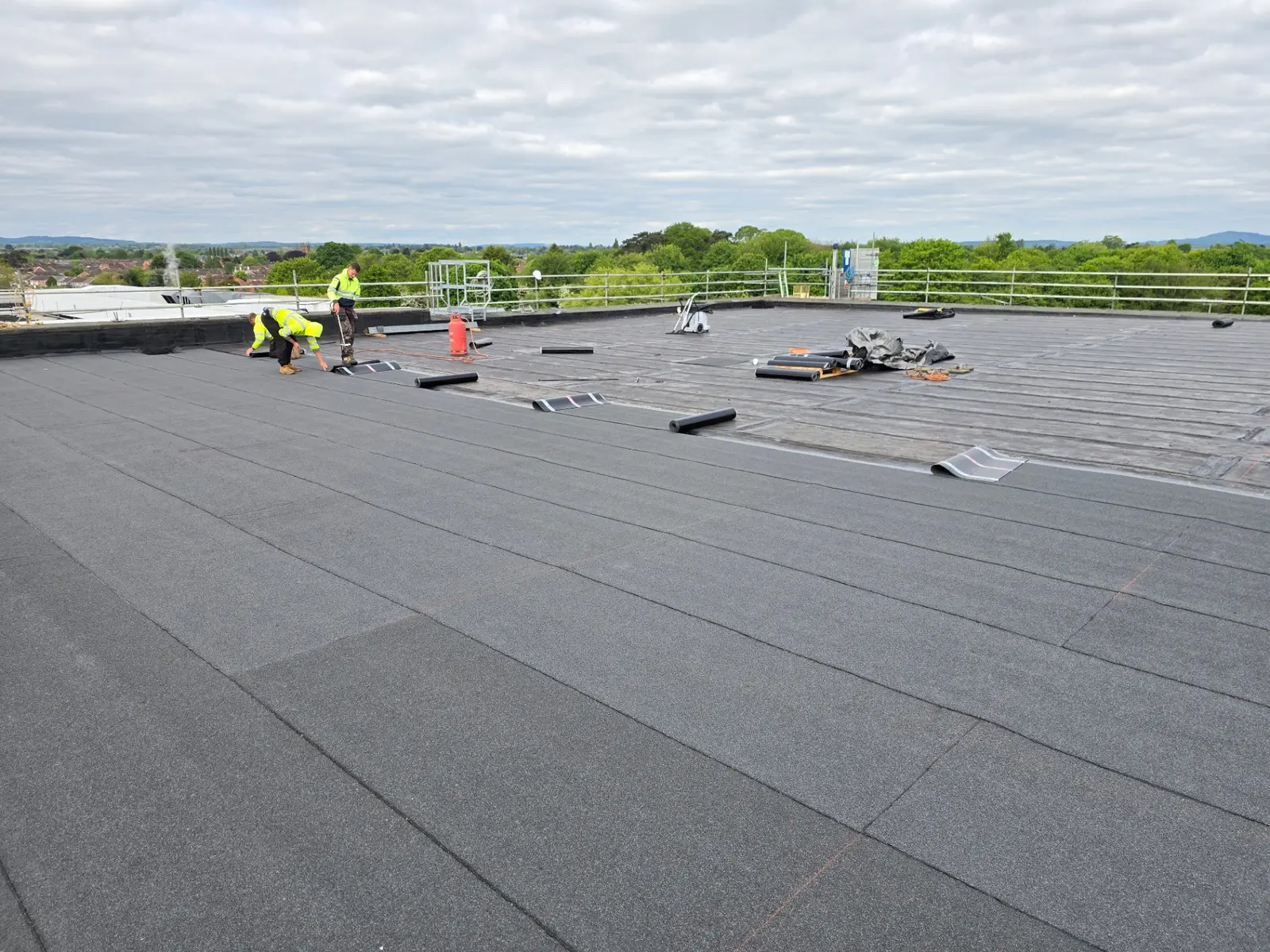
Roof Maintenance & Repairs
Planned inspections and reactive repairs that keep multi-let buildings watertight between larger projects.
View service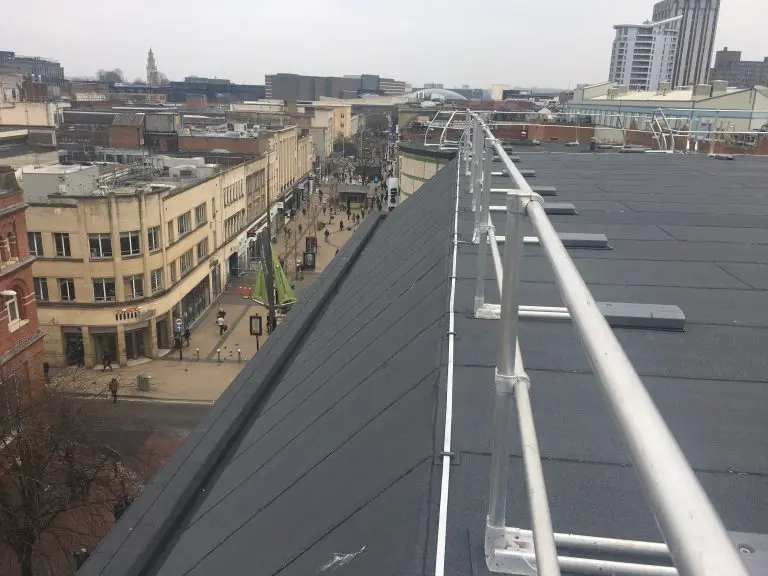
Roof Safety Systems
Guardrails, walkways and anchor points so plant, lifts and roof access stay safe for maintenance teams.
View service
Guidance for commercial property roof decisions
Technical articles on specification, guarantee options and refurbishment choices for occupied commercial buildings.
View all Knowledge articles
Commercial roofing questions
Usually yes. The roof is phased into zones, noisy operations are kept to agreed hours, and access and deliveries are managed so occupiers can trade and work. Some scopes still need short possession of a specific area, which is identified before the programme is agreed.
Through scaffold fans, protected walkways, exclusion zones, signage and controlled delivery slots, set out in the construction phase plan where TRS is appointed as Principal Contractor.
Our surveys record roof condition, the defects found, likely remaining life and costed options. That supports planned maintenance budgeting and informs dilapidations or acquisition discussions, but the property advice itself sits with your building surveyor or adviser rather than with TRS.
Sometimes. Where the existing insulation and deck are dry and structurally sound, an overlay is quicker and less disruptive. Moisture surveys and core samples, undertaken or coordinated by TRS where appropriate, confirm whether it is suitable.
Guarantee options depend on the system chosen, the substrate condition and the manufacturer's own requirements. What is achievable is confirmed at survey and specification stage, in writing, rather than assumed at the outset.
Where the lease, planning conditions and building management permit it, yes. Evening and weekend working is common for noisy operations or work above trading areas, and is priced and programmed accordingly.
A programme is agreed and managed, but roofing on occupied buildings is weather-dependent and access-dependent. We plan contingency into the sequence and report progress rather than promising dates that ignore those risks.
TRS forms and weathers the roof-level interfaces and coordinates the sequence. Mechanical and electrical isolation, plant lifting and re-commissioning are carried out by the building's own contractors or by specialists coordinated by TRS.
Commercial roof refurbishment
Planning roof works on an occupied commercial building?
If you need a condition survey, a costed options report or a second opinion on a recommendation you have already received, get in touch.