
Flat Roofing
Commercial & Industrial Flat Roofing
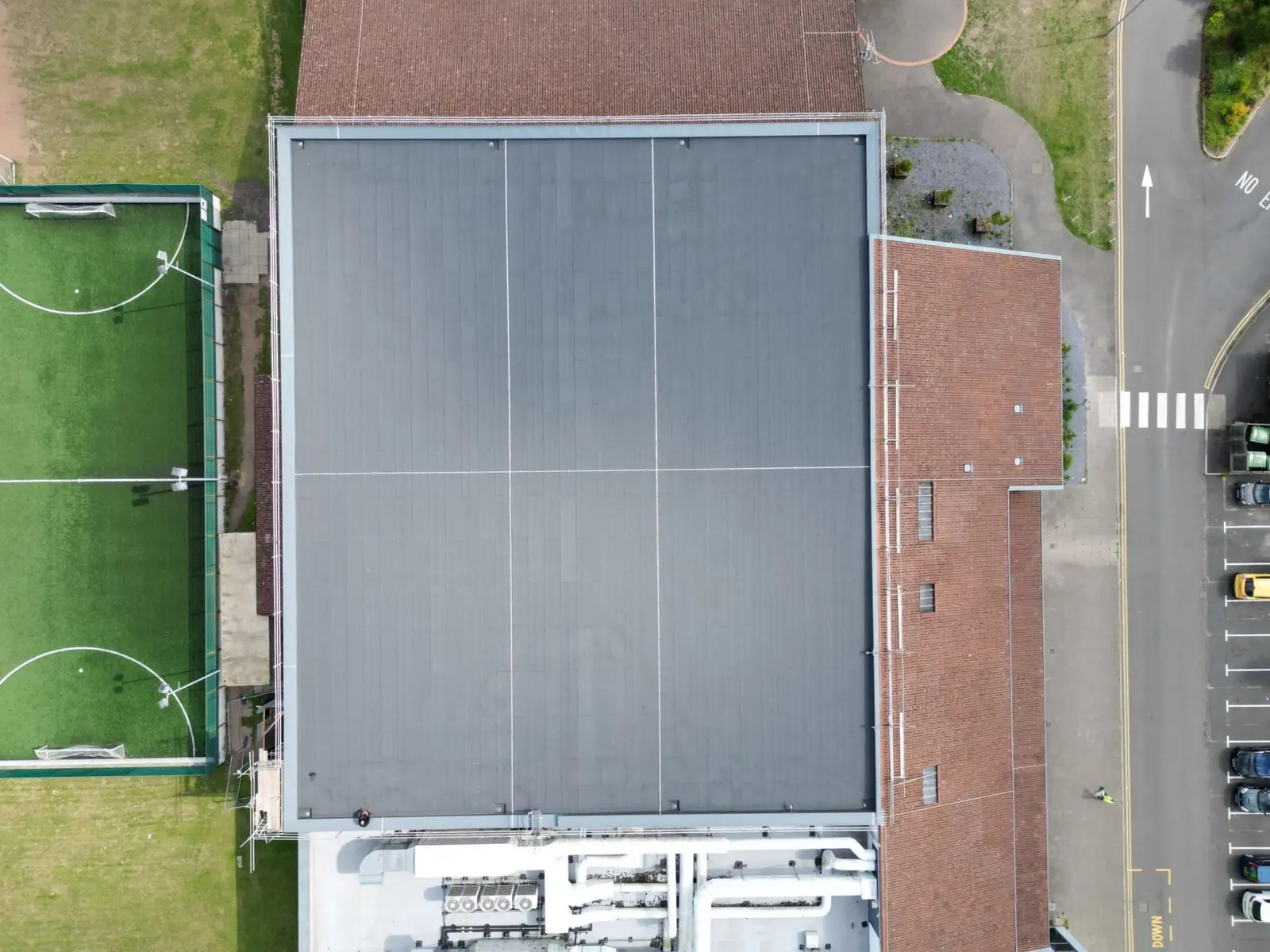
TRS delivers bituminous membrane, single-ply and liquid flat-roof systems, selecting the approach around the existing build-up, moisture condition, detailing, thermal requirements and intended use of the roof. Overlay, insulated refurbishment and strip-and-replace are all assessed from inspection of the existing construction, not from a fixed product range.
Introduction
The system follows the existing construction.
Commercial flat roofing has no single right answer. The right build-up depends on the roof in front of us. We look at deck condition and the number of existing layers. We check how well those layers adhere, and whether the build-up is dry or moisture-laden. Upstand and threshold heights, drainage falls and outlet positions all shape what is possible. So do thermal targets, fire and specification requirements, access constraints, and how the building is used.
Bituminous membrane systems (felt) remain a mainstay of UK commercial flat roofing. It is also a strong TRS capability. We install two-layer torch-on and self-adhesive overlays, insulated refurbishment build-ups, and full strip-and-replace where the existing construction is wet or delaminated. Alongside bituminous membranes we install single-ply membrane and liquid-applied systems where life extension or complex detailing suit them better. We also carry out localised repairs and planned maintenance where the failure is isolated. Every project starts with a condition survey and moisture investigation where required. The specification is then agreed with the manufacturer.
Most of our flat roofing is carried out on occupied buildings, including schools and healthcare estates. Temporary weather protection, daily close-down and internal risk are planned before work starts. TRS acts as Principal Contractor under CDM 2015, is SSIP-accredited, and provides a dedicated Contracts Manager as the single point of contact from survey to handover.
Why refurbish
What a well-specified flat-roof refurbishment achieves.
Flat roof systems
Flat roofing systems and refurbishment options
The options below are those TRS most commonly specifies on commercial buildings. They are not a closed list, and the appropriate solution is selected following inspection of the existing construction and its condition.
Two-Layer Bituminous Membrane Overlay
Torch-on or self-adhesive two-layer bituminous membrane overlay bonded to a sound existing build-up. Usually the least disruptive route to renewed waterproofing where moisture testing supports overlaying.
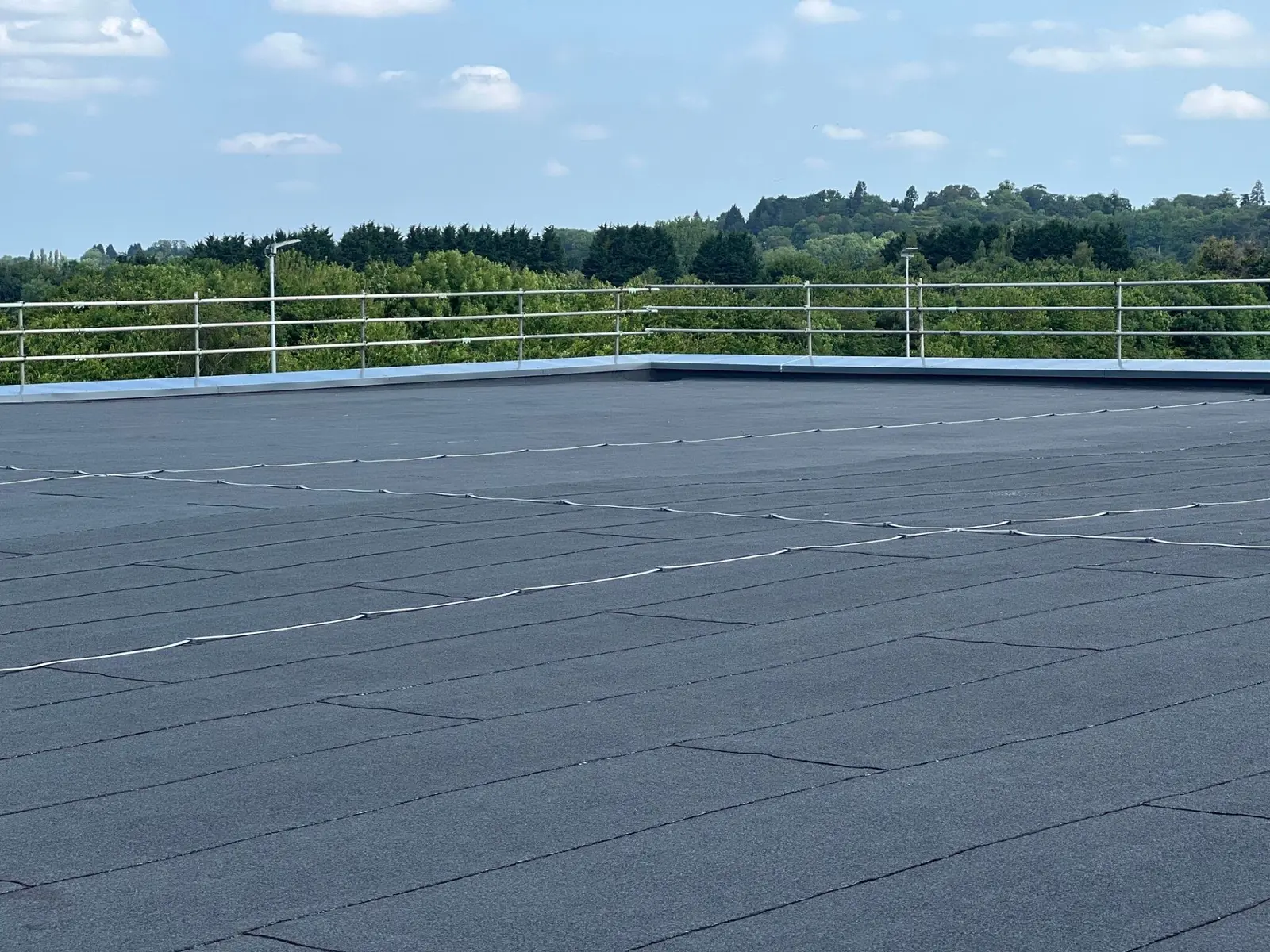
Insulated Bituminous Membrane Refurbishment
Insulation bonded over the existing waterproofing and capped with a two-layer bitumen build-up, renewing the waterproofing and improving thermal performance in one operation where depth and interfaces allow.
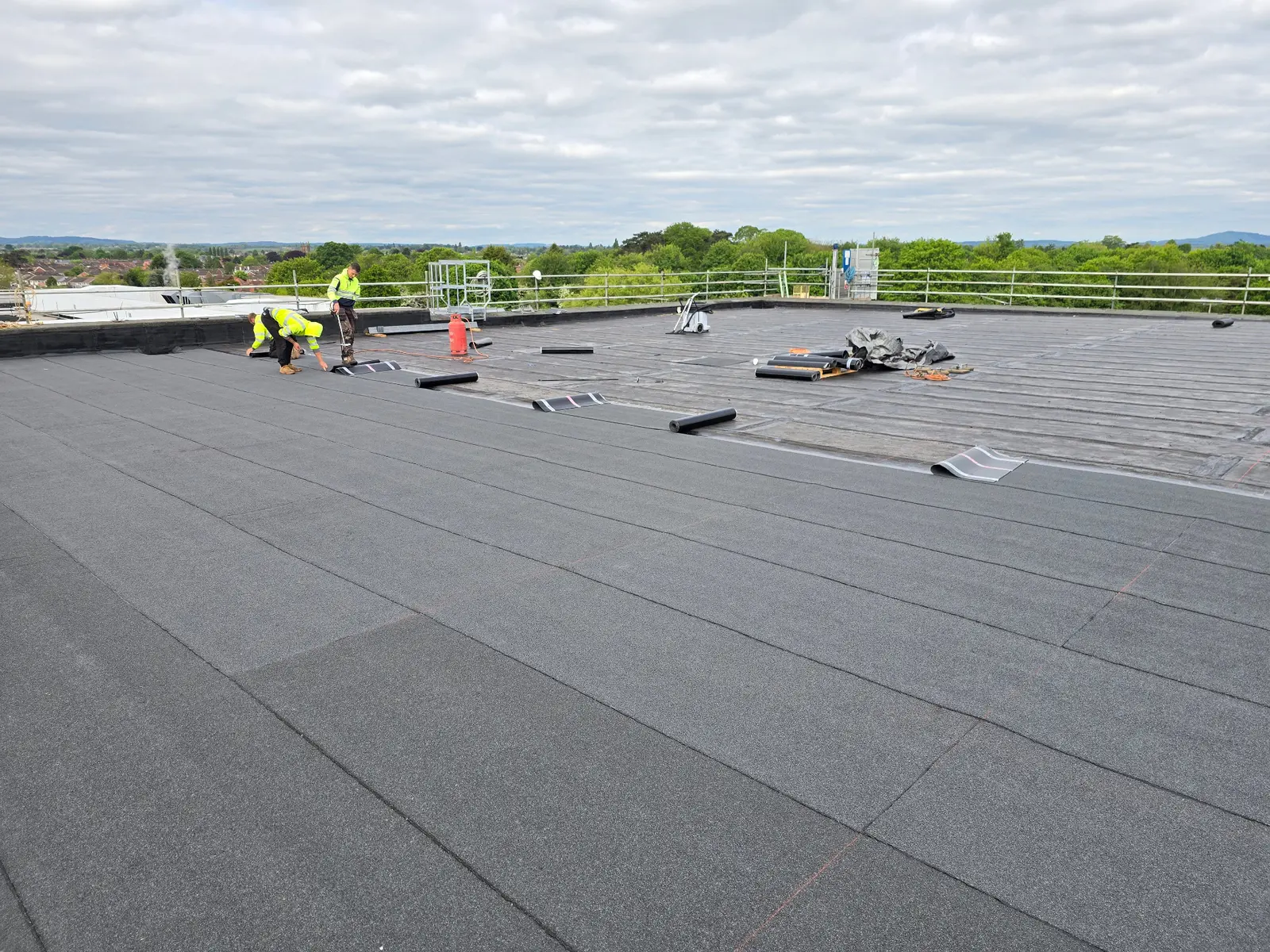
Strip And Replace
Full strip-out to deck, new vapour control layer, new insulation and a new multi-layer system. The appropriate route where the existing construction is wet, delaminated or otherwise beyond overlay.
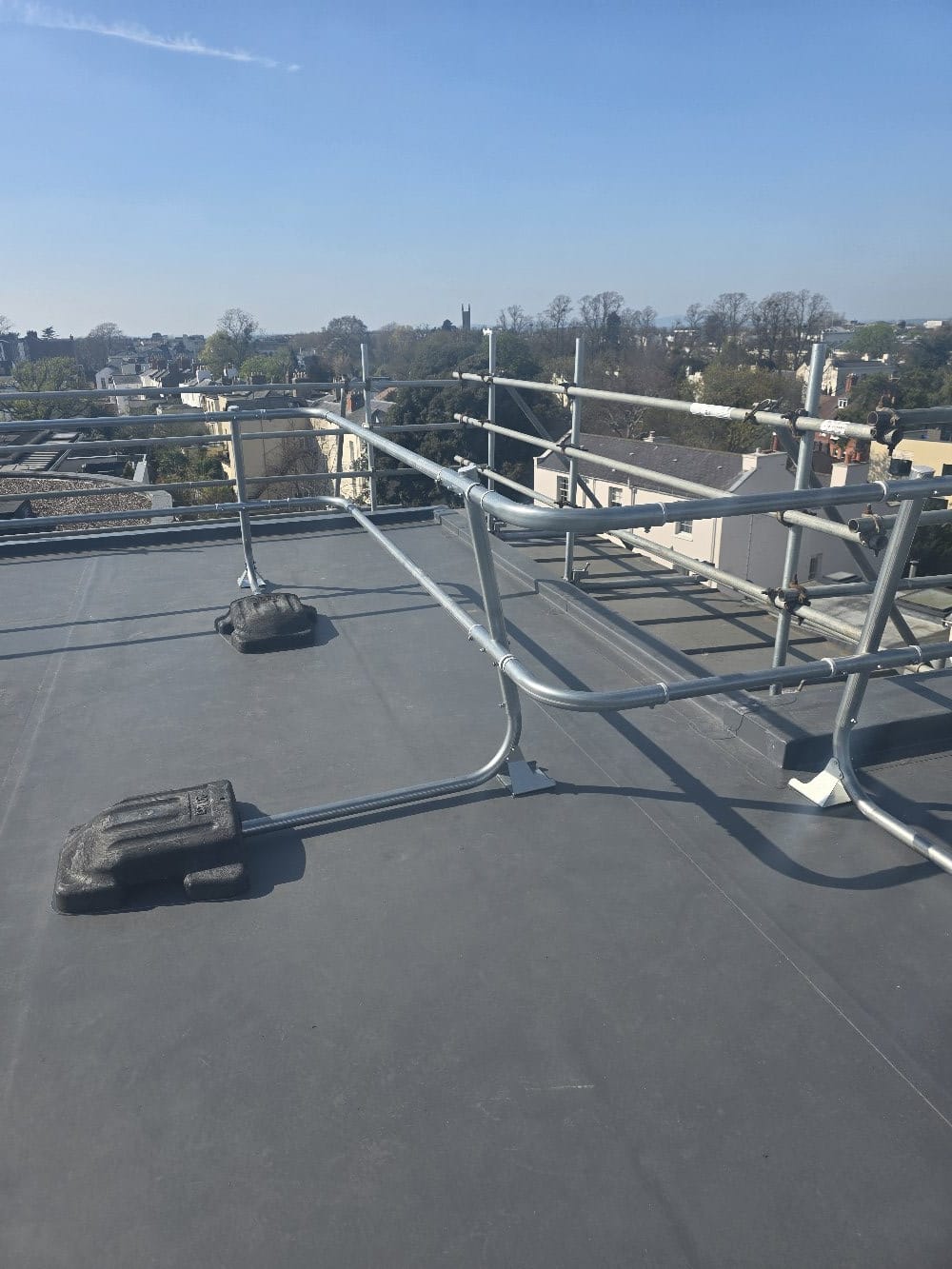
Single-Ply Membrane
Mechanically fixed or adhered PVC, TPO and FPO single-ply. Often suited to larger, low-pitched roofs where installation speed and hot-air weldability are priorities.
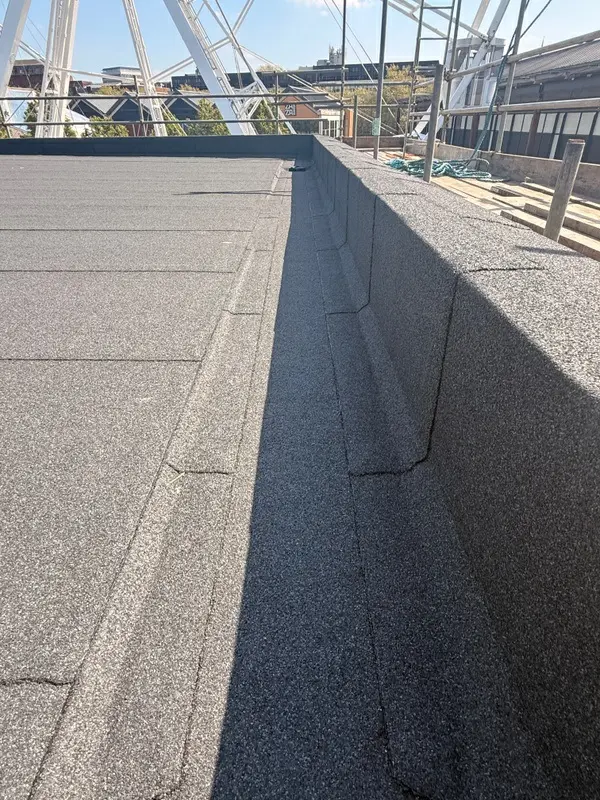
Liquid-Applied Systems
PMMA and polyurethane cold-liquid systems for balconies, walkways, complex detailing and life extension where a full overlay is not practical or economic.
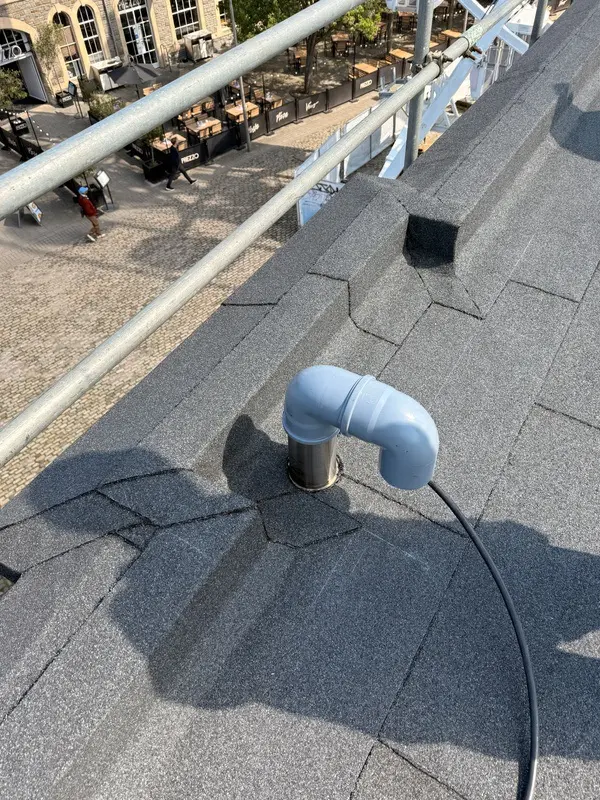
Localised Flat Roof Repairs
Targeted repairs to failed laps, upstands, outlets and penetrations on bitumen, single-ply and liquid roofs, with photographic reporting and recommendations for planned works.
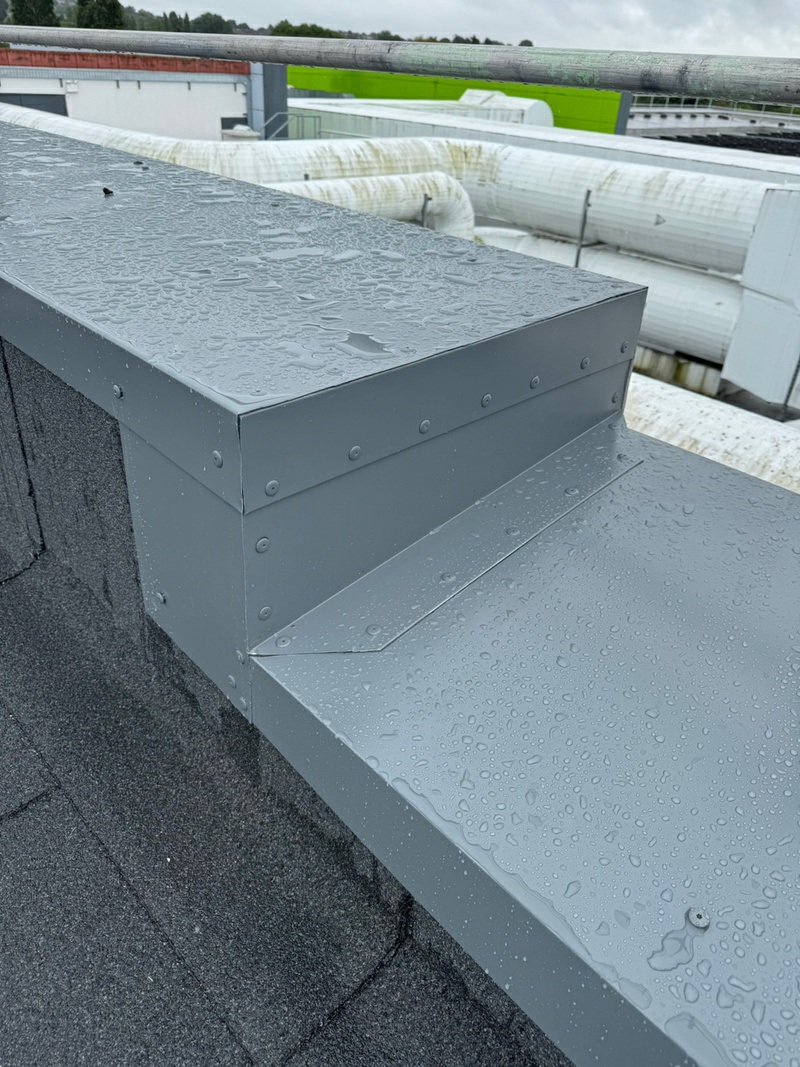
Capping & Flashings Refurbishment
Replacement or overhaul of parapet cappings, upstand flashings, kerb details and edge trims. Often the first point of failure on an otherwise sound flat roof, and addressed as part of a wider refurbishment or as a standalone detail repair.
Delivery
Overlay or strip and replace?
This is the decision most commercial flat-roof refurbishments turn on, and it is answered by investigation rather than preference. TRS assesses the following before specifying, and the outcome can differ between roof areas on the same building.
Moisture Test Results
Core samples, capacitance or thermographic findings showing whether the existing build-up is wet.
Condition & Adhesion
Adhesion, blistering and delamination of the existing layers, and the condition of the deck below.
Existing Coverings
How many coverings are already in place and whether a further layer is acceptable.
Heights & Falls
Threshold, kerb and perimeter heights, plus drainage falls and outlet positions.
Thermal Target
Whether insulation is to be improved, and the depth genuinely available to do it.
Specification Constraints
Fire, loading and access requirements applicable to the building and the works.
A recommendation based on the roof
Following the initial survey and any agreed investigation, TRS can recommend whether repair, overlay or replacement is appropriate, together with the proposed build-up, key constraints and available guarantee options.
Industries we serve
Where we deliver flat roofing.
Our process
From condition assessment to completed roof system.
Step 1
Condition & Moisture Investigation
Roof-by-roof condition survey with moisture investigation where the existing build-up is in question.
Step 2
Overlay-Versus-Strip Assessment
Findings used to establish whether overlay, insulated refurbishment or strip-and-replace is appropriate.
Step 3
System & Thermal Specification
Build-up, insulation depth, falls and detailing agreed with the manufacturer.
Step 4
Access & Temporary Weather Planning
Access, daily close-down and temporary protection planned around the occupied building.
Step 5
Installation & Staged Inspection
Installed in phases, with inspection at vapour control, insulation and cap-sheet stages.
Step 6
Handover
O&M information, guarantees where applicable and maintenance requirements issued.
Why TRS
Flat roofing specified from what the roof actually is.
TRS surveys before specifying, then delivers flat-roof refurbishment on live commercial buildings where the space below cannot be exposed to water.
- Condition
- Assessed roof by roof
- Moisture
- Considered before overlay
- Thermal
- Options set out at specification
- Handover
- Documented on completion
Principal Contractor
CDM 2015 Principal Contractor on complex live-building schemes.
Survey-Led Specification
Specifications are written for the individual roof and project objectives.
Live & Occupied Sites
Works planned and sequenced around buildings that remain in use.
Experienced Managers
Dedicated Contracts Managers on every project, one point of contact.
Guarantee Options
Where a system guarantee is available, availability and duration depend on the selected system, specification, substrate condition, preparation and manufacturer requirements.
Documented Handover
Quality checks through the works, with O&M and maintenance information at completion.
Featured projects
Recent flat roofing projects.
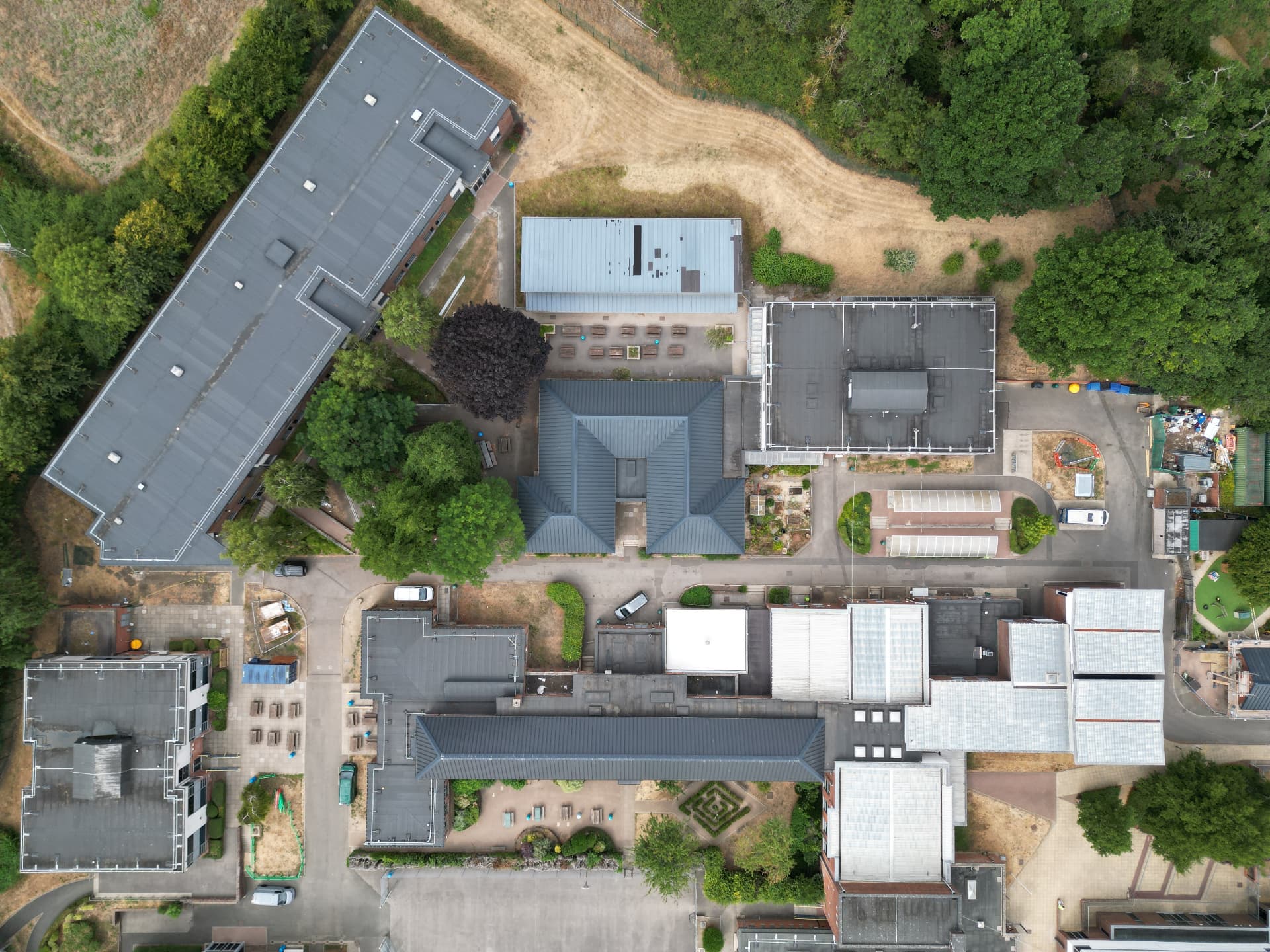
education
Kingsbury Green Academy
Calne, Wiltshire SN11 8YH
View project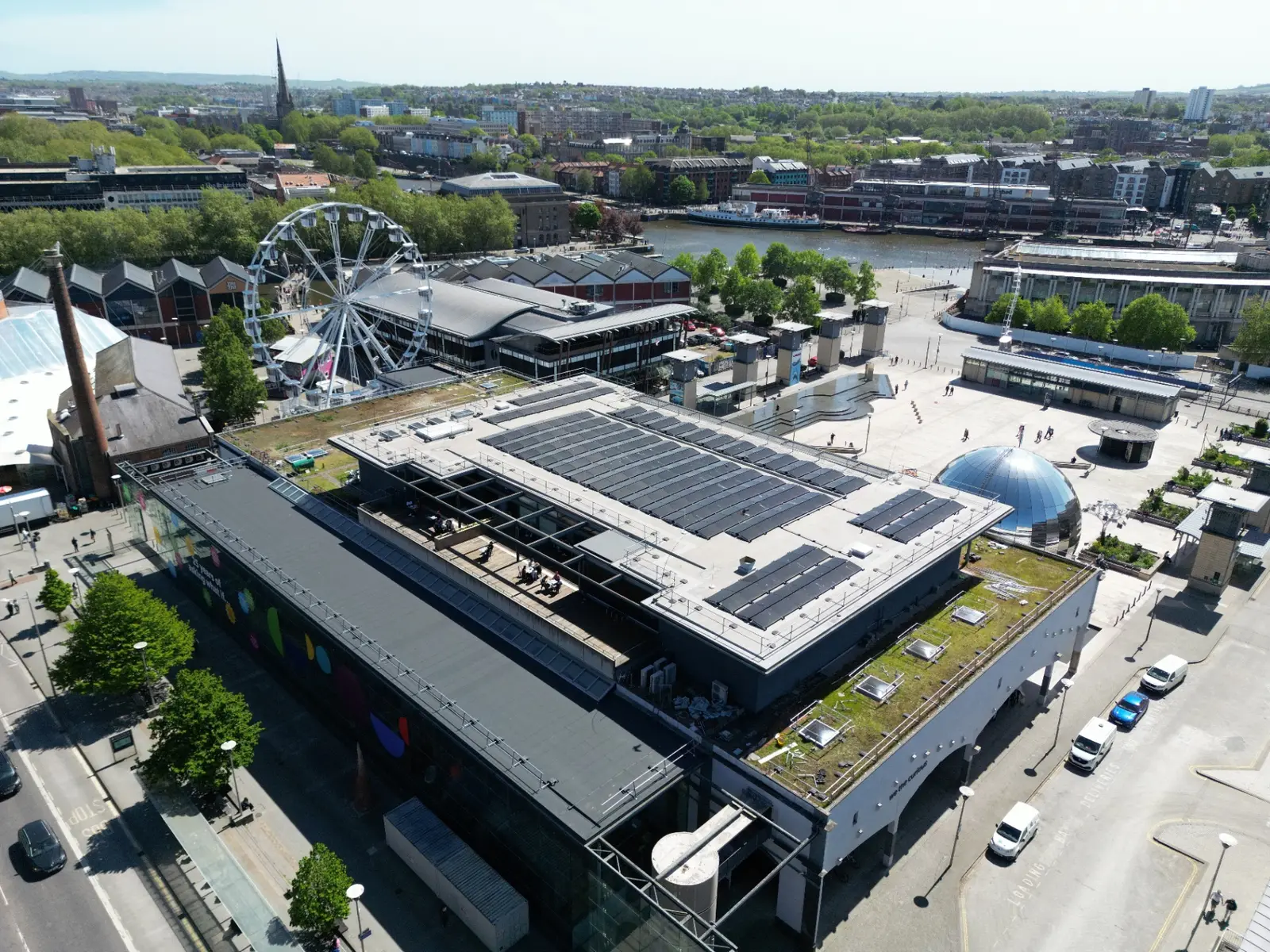
public-buildings
We The Curious, Bristol
Bristol
View project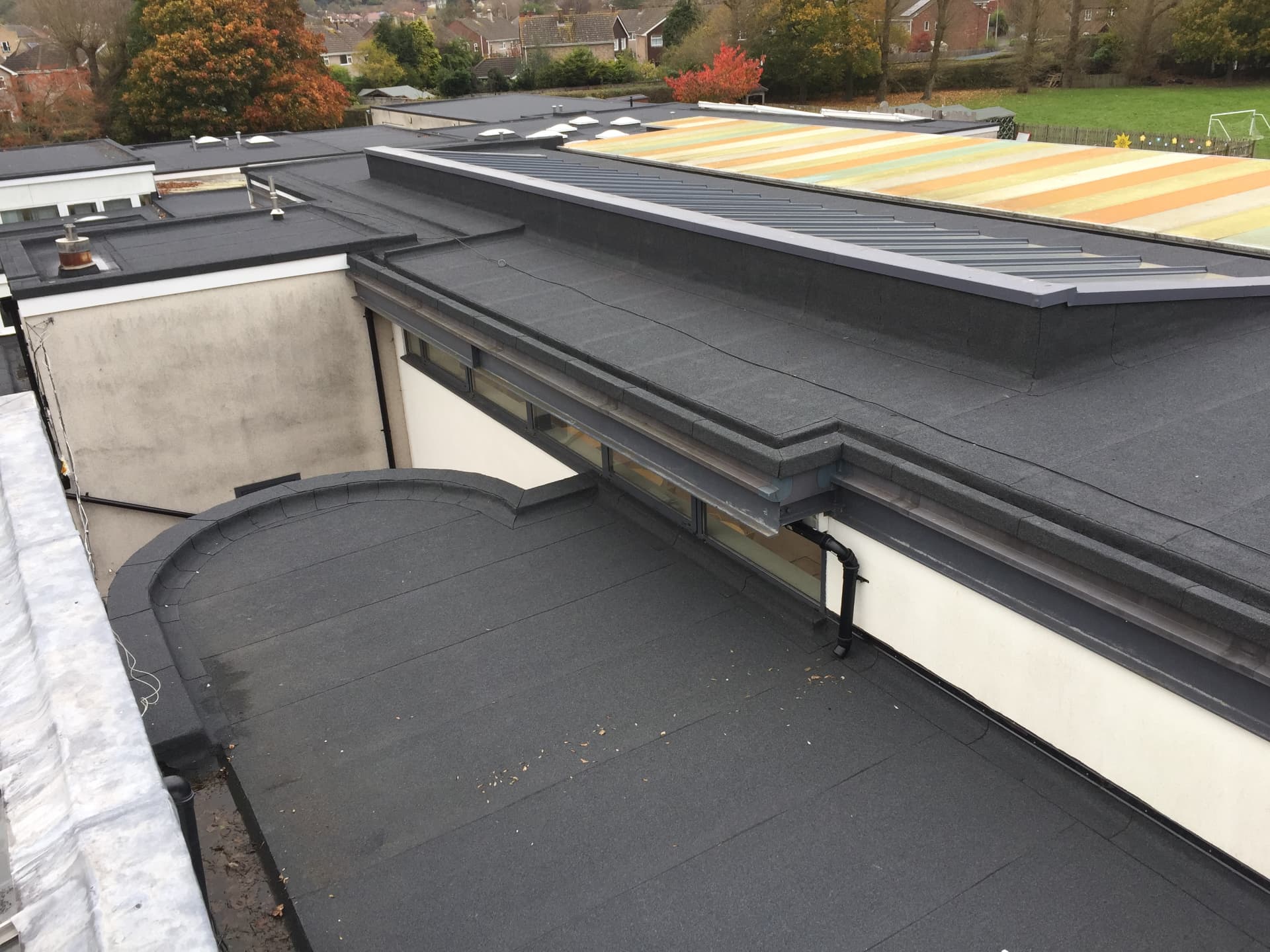
education
Yeo Moor School Flat Roof Refurbishment – Clevedon
Clevedon
View project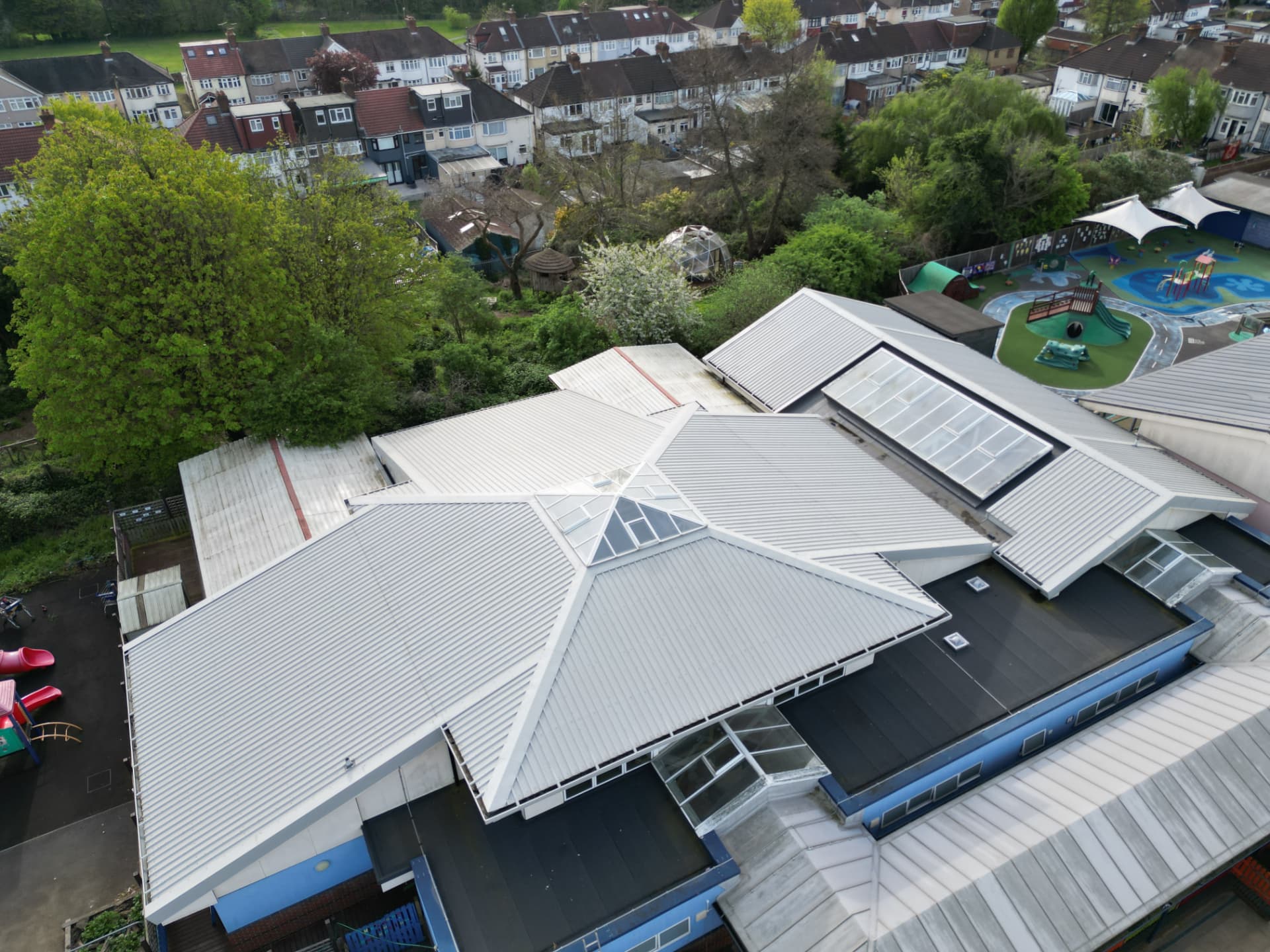
education
Oakington Manor Primary School Roof Replacement – Wembley
Wembley, London
View project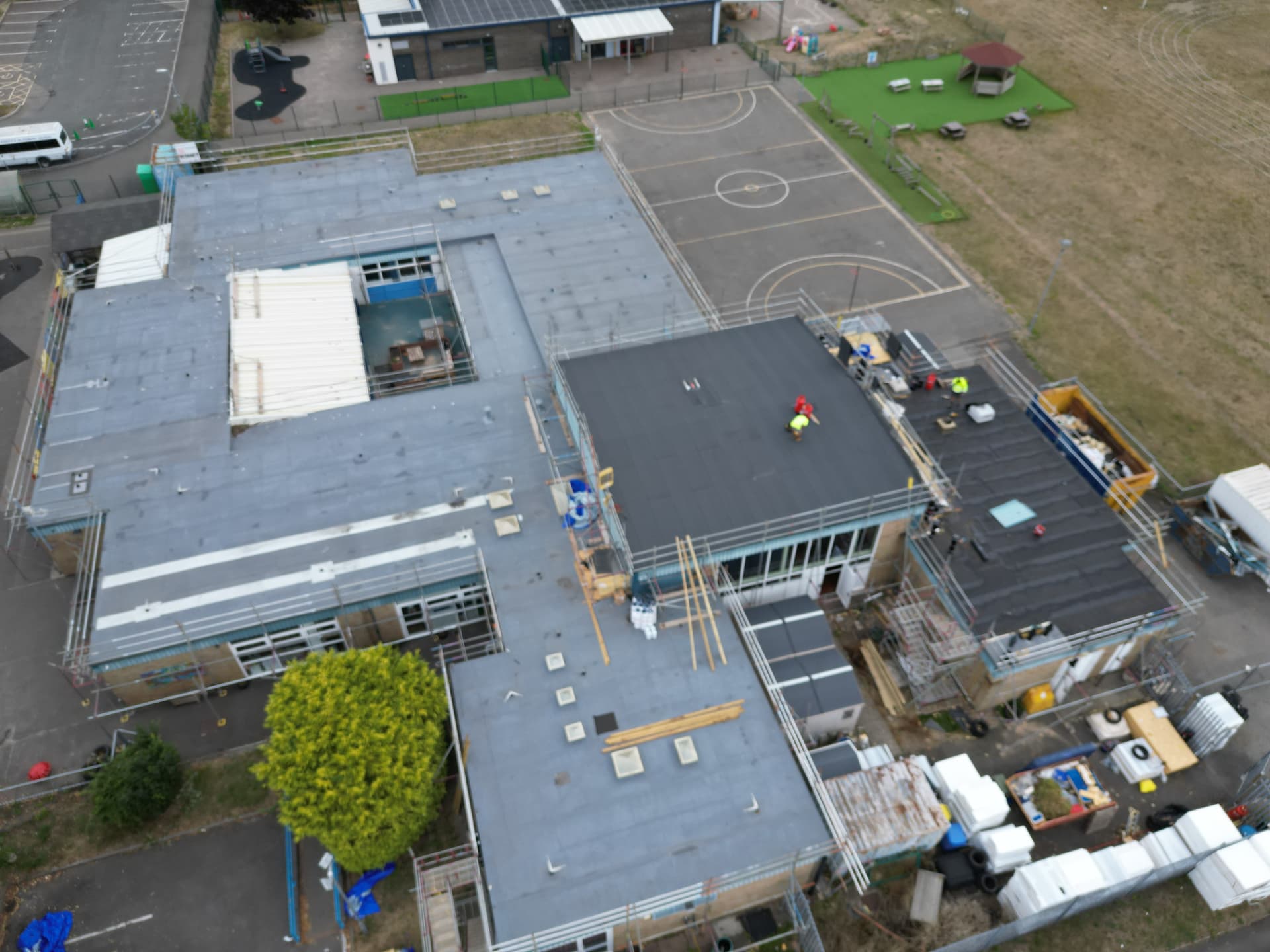
education
St Josephs Primary School Flat Roof Refurbishment – Penarth
Penarth, Vale of Glamorgan
View project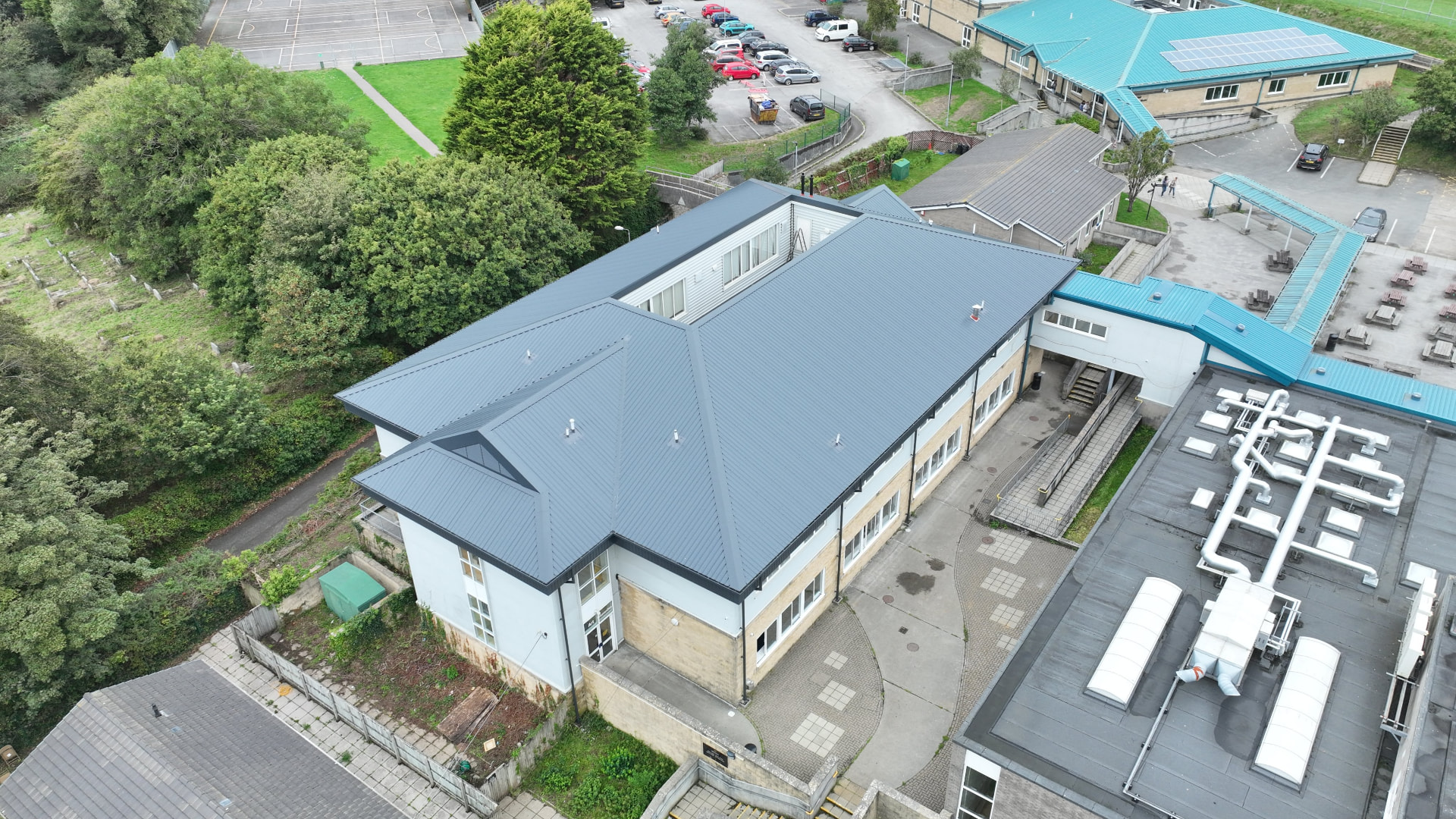
education
Pool Academy Roof Overclad and Refurbishment – Redruth
Redruth, Cornwall
View project
FAQs
Flat roofing questions we get asked.
If your question isn't here, ask our team directly on the contact page, or read the technical guidance in our knowledge hub.
- Sometimes. Overlaying depends on whether the existing build-up is dry, how well the existing layers are adhered, the condition of the deck, how many coverings are already present, and whether threshold, kerb and perimeter heights can accommodate the additional depth. The answer follows investigation of the specific roof.
Speak to TRS
Planning a flat roof refurbishment?
We can survey the roof, investigate moisture where needed, and set out overlay, insulated refurbishment and replacement options with a budget and programme.
Related services