Flat and metal roof defects that create infection and water-ingress risks in hospitals
Practical guidance for NHS estates managers, private hospital facilities directors and framework surveyors on flat and metal roof defects that create infection, mould, slip and equipment risks. Linked to budget and programme reality.
Roof Surveys & DefectsBudget & ProgrammeBy TRS RoofingReviewed by TRS RoofingPublished 27 Jul 20266 min read
Download this article. Clear guidance on the flat roof and metal roof defects that create infection, water ingress and operational risks in hospitals.
Water ingress on a hospital roof is never just a building-maintenance issue. When it occurs near clinical areas it can create infection risks, damage expensive equipment, generate mould, and produce slip hazards for staff and patients.
The difficulty for estates teams and framework surveyors is that the first signs are often subtle. A small leak in a plant room or above a corridor can develop into a much larger problem before it is properly diagnosed. Tight budgets and the need to keep the hospital fully operational make early, accurate assessment even more important.
As a specialist commercial and industrial roofing contractor, we regularly work with NHS estates teams, private hospital facilities directors and their surveyors. This article sets out the most common flat-roof and metal-roof defects that create these risks and the practical steps that help control them.
Why water ingress is a clinical risk
In a hospital environment water ingress can lead to several serious consequences:
Moisture supports mould growth, which can affect air quality and create infection-control concerns
Wet floors increase the risk of slips and trips for staff, patients and visitors
Water can damage sensitive and expensive medical equipment, imaging suites or plant
Persistent damp can force the temporary closure of clinical spaces, with direct impact on patient care and can affect healthcare workers
These risks should mean that a roof defect is rarely treated as a routine repair. It should become an operational and clinical priority.
Common flat-roof defects that create problems
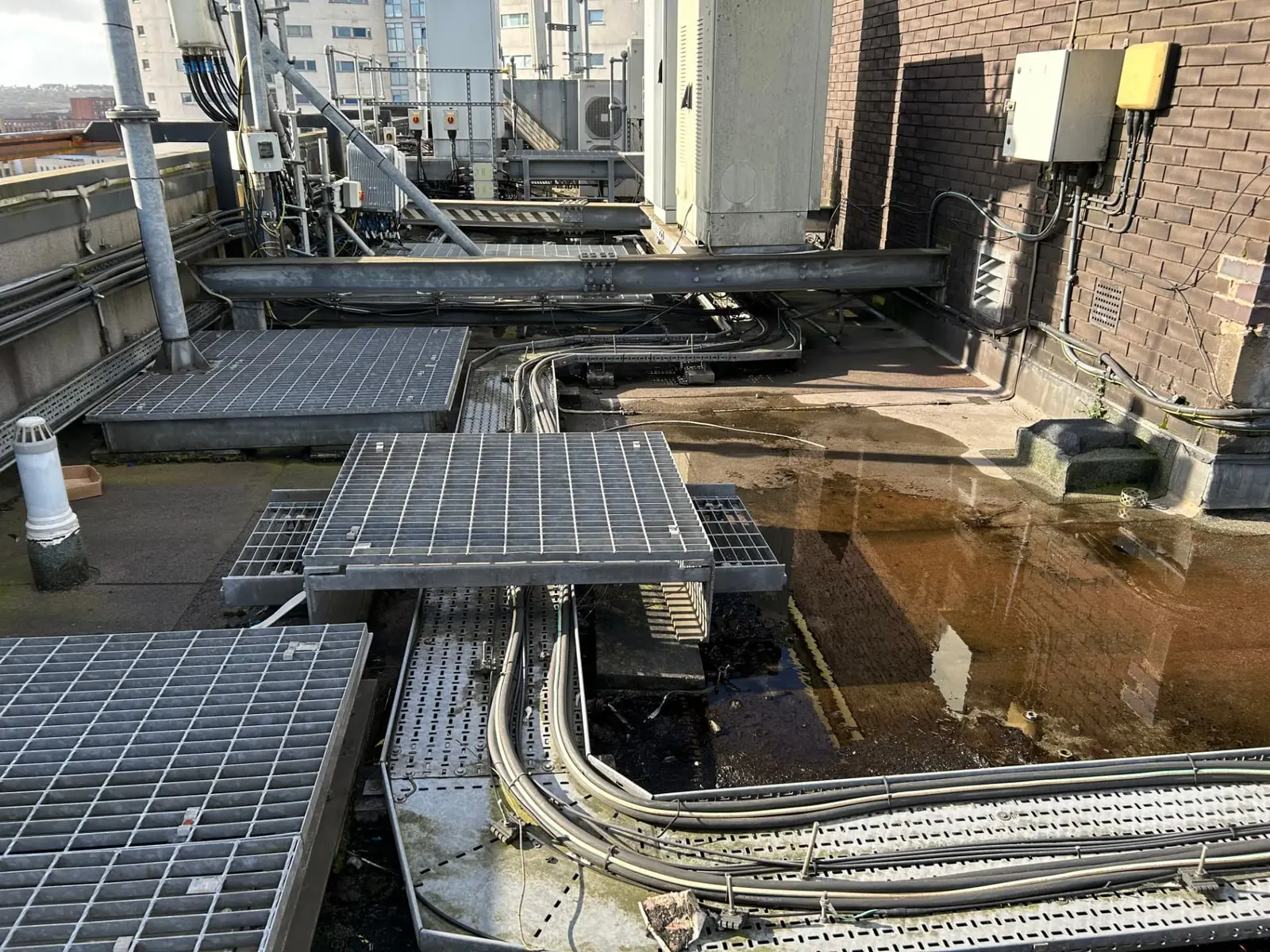
Many hospital buildings still rely on older flat-roof systems. Typical issues that lead to water ingress include:
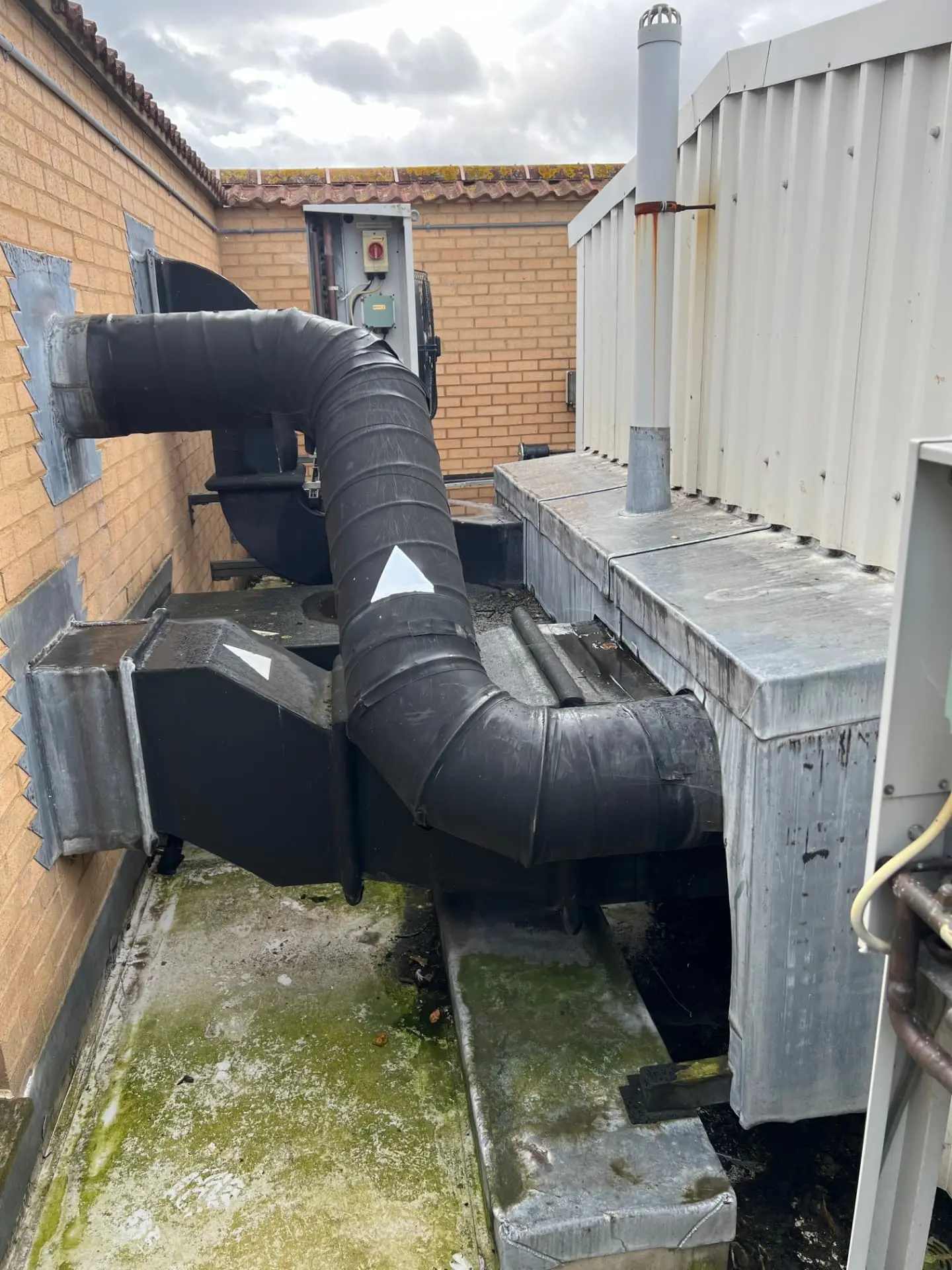
Failed or poorly detailed upstands around plant, pipes and rooflights
Degraded membrane at roof edges and abutments
Ponding caused by insufficient falls or blocked outlets
Previous patch repairs that have reached the end of their life
Thermal movement opening joints and seams
These defects often start small and remain hidden until secondary damage appears inside the building.
Common metal-roof defects that create problems
On metal-covered areas the risks are different but equally serious:
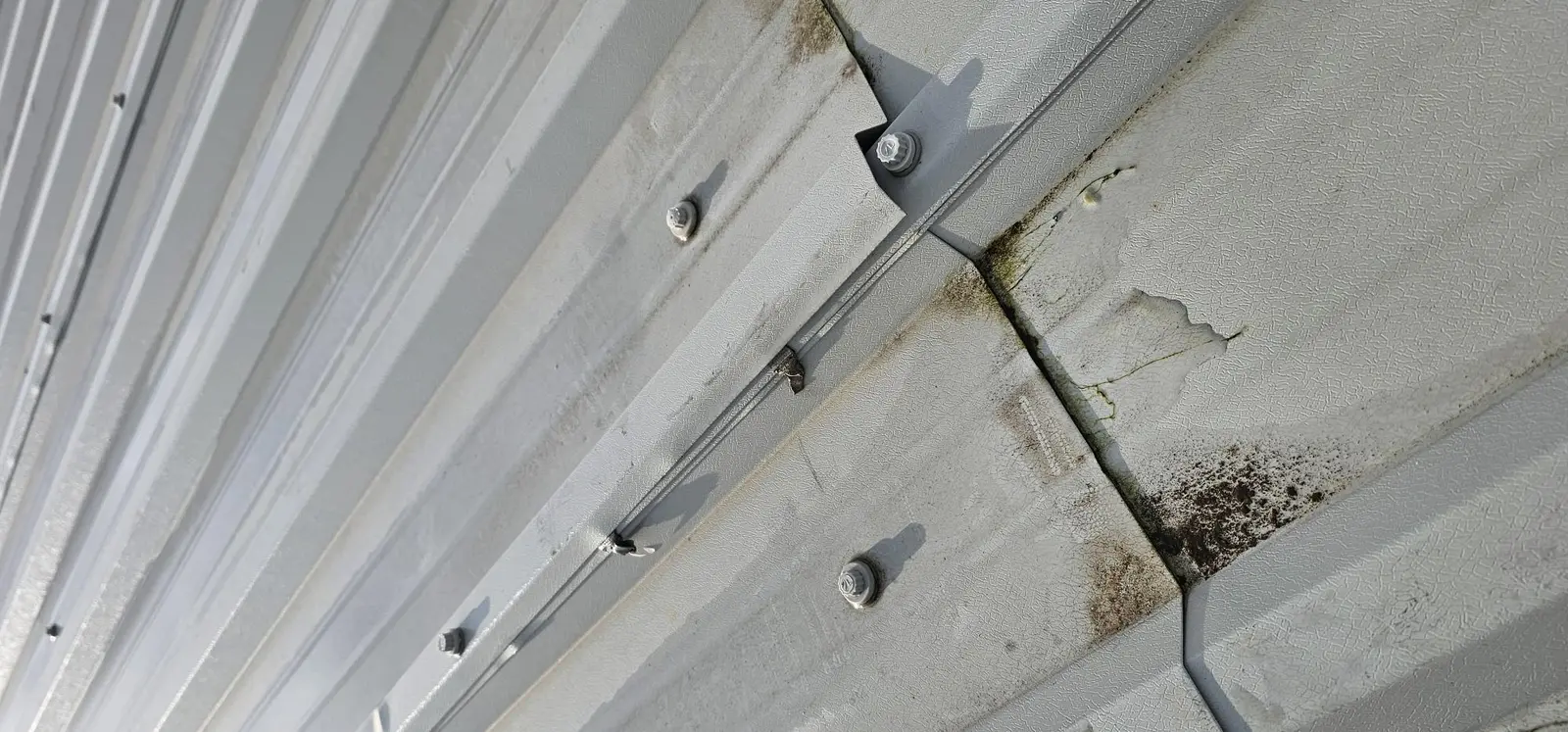
Cut-edge corrosion allowing water to track under the sheets
Failed or backed-out fixings
Degraded sealant at overlaps and penetrations
Condensation forming on the underside of the sheets where insulation or vapour control is inadequate
Interface failures where metal roofs meet flat roofs or plant rooms
Because metal roofs can appear serviceable from below, the true condition is frequently under-estimated at first inspection.
The difficulty of getting a reliable diagnosis
Hospital roofs are rarely straightforward to survey. Access may be restricted, plant may occupy large areas of the roof, and operational constraints limit the time available for intrusive investigation.
A visual inspection alone is often not enough. Moisture mapping, core sampling and careful examination of interfaces are frequently required to distinguish between surface staining, condensation and genuine water ingress. Without this level of detail, estates teams can find themselves approving temporary repairs that do not solve the underlying problem. Our approach to roof surveys is set out in more detail, or you can book a roof survey.
Working within tight budgets
Most hospital estates operate under significant budget pressure. The temptation is to specify the lowest-cost short-term repair. In practice this often leads to repeated interventions, higher whole-life cost, and continued clinical risk.
A clear understanding of the roof's remaining life, the true extent of the defects, and the operational constraints allows a more realistic option appraisal. In many cases a well-planned phased refurbishment or targeted overlay delivers better value than successive emergency repairs. To test early budget and programme assumptions, use the Commercial Roofing Budget & Programme Planner.
Controlling noise, dust and fumes
Any roof works on a live hospital site must be planned around clinical activity. Noise, dust and fumes can affect wards, operating theatres, laboratories and sensitive equipment.
Practical controls usually include:
Phased working and out-of-hours or weekend packages where necessary
Full segregation of the works area
Dust suppression and careful material handling
Selection of systems and methods that minimise solvent or fume release
Clear communication with infection-control and facilities teams before work starts
These measures need to be designed into the programme from the outset rather than added later.
What a good early survey should capture
In addition to the usual roof condition information, a hospital survey should specifically record:
Location of clinical areas, plant rooms and sensitive equipment relative to the roof
History of previous leaks and repairs
Access and operational constraints
Any infection-control or noise restrictions that will affect the works
Budget and programme parameters
This information allows the technical solution and the delivery method to be developed together.
Conclusion
Flat-roof and metal-roof defects on hospital buildings create risks that go far beyond the building fabric. Water ingress can affect infection control, patient and staff safety, and the performance of expensive equipment.
Early, detailed diagnosis and clear communication between the estates team, the surveyor and the contractor are the most effective ways to manage these risks within the constraints of a live hospital environment.
At TRS we regularly support NHS and private hospital clients and their framework surveyors in identifying these issues and turning them into practical, cost-aware solutions.
If you would like a second opinion on a hospital roof condition or a proposed repair or refurbishment scope, feel free to get in touch or book a roof survey.