Keeping schools open during roof works: phasing and safeguarding
How to plan and phase commercial roof refurbishment on live school sites so teaching, safeguarding and site safety are protected, and why booking the summer holiday window early is essential.
Working on live school sites can be one of the most challenging environments for a contractor. The building has to stay open, children and staff have to be protected, and most often the programme has to fit around the school holidays.
Many first inspections and tender packages under-estimate how tightly these constraints interact. The result is often late programme changes, restricted access, or unexpected costs once the contractor is on site.
As a specialist commercial and industrial roofing contractor, we regularly work with school estates teams and their surveyors. This article sets out the practical issues that should be considered early so that the roof solution and the delivery method are designed around the school's operational reality.
Understanding the real constraints on a live school
A school is not a standard commercial building. The key constraints that affect roof works are usually:
Safeguarding and complete separation of the works area from pupils and staff
Limited or zero ability to close teaching spaces during term time
Fixed summer-holiday windows that are shorter than many people assume once mobilisation and making-good are included
Exam periods and other non-negotiable dates
Delivery and material storage restrictions during the school day
Noise, dust and vibration limits near teaching spaces
These factors should be recorded at survey stage and carried through into the specification and programme.
DBS checks and safeguarding
As a TRS company standard, the personnel we deploy to school sites hold enhanced DBS certificates, supporting the safeguarding arrangements agreed with each school. We recommend that DBS expectations are written into the contract and evidenced before mobilisation. Contractors who treat DBS as optional or "only if the school asks" should be treated with caution.
Communication at every stage
Clear, regular communication between the school, the surveyor and the contractor is the single biggest factor in successful delivery.
At pre-construction stage the parties need to agree access routes, compound location, delivery times, and the exact dates the roof will be handed over. During the works the contractor should provide short daily or weekly updates so the school always knows what is happening and what is coming next. At completion the handover should include a clear explanation of the guarantee, any maintenance requirements, and remaining temporary protection if the project is phased.
When communication breaks down, small issues quickly become programme threats.
Why early instruction matters
Almost every school wants its roof works carried out in the school holidays. Competent contractors who understand school safeguarding and operational constraints are therefore booked many months in advance.
If a contractor can suddenly fit a school project into the next holiday period at short notice, it is reasonable to ask why. It may indicate spare capacity for good reasons, but it can also signal that the contractor is less experienced with the sector or is prioritising volume over careful planning. Early engagement gives the school and its surveyor the best chance of securing a team that is properly prepared.
Phasing options that actually work
Most successful school roof projects use one of three broad approaches:
1. Full summer-holiday delivery, the entire roof (or a large phase) is completed in a single summer window. This is only realistic when the roof area is modest and the contractor can mobilise quickly.
2. Multi-holiday phased delivery, work is split across two or more holiday periods with temporary weatherproofing between phases. This is common on larger or more complex roofs.
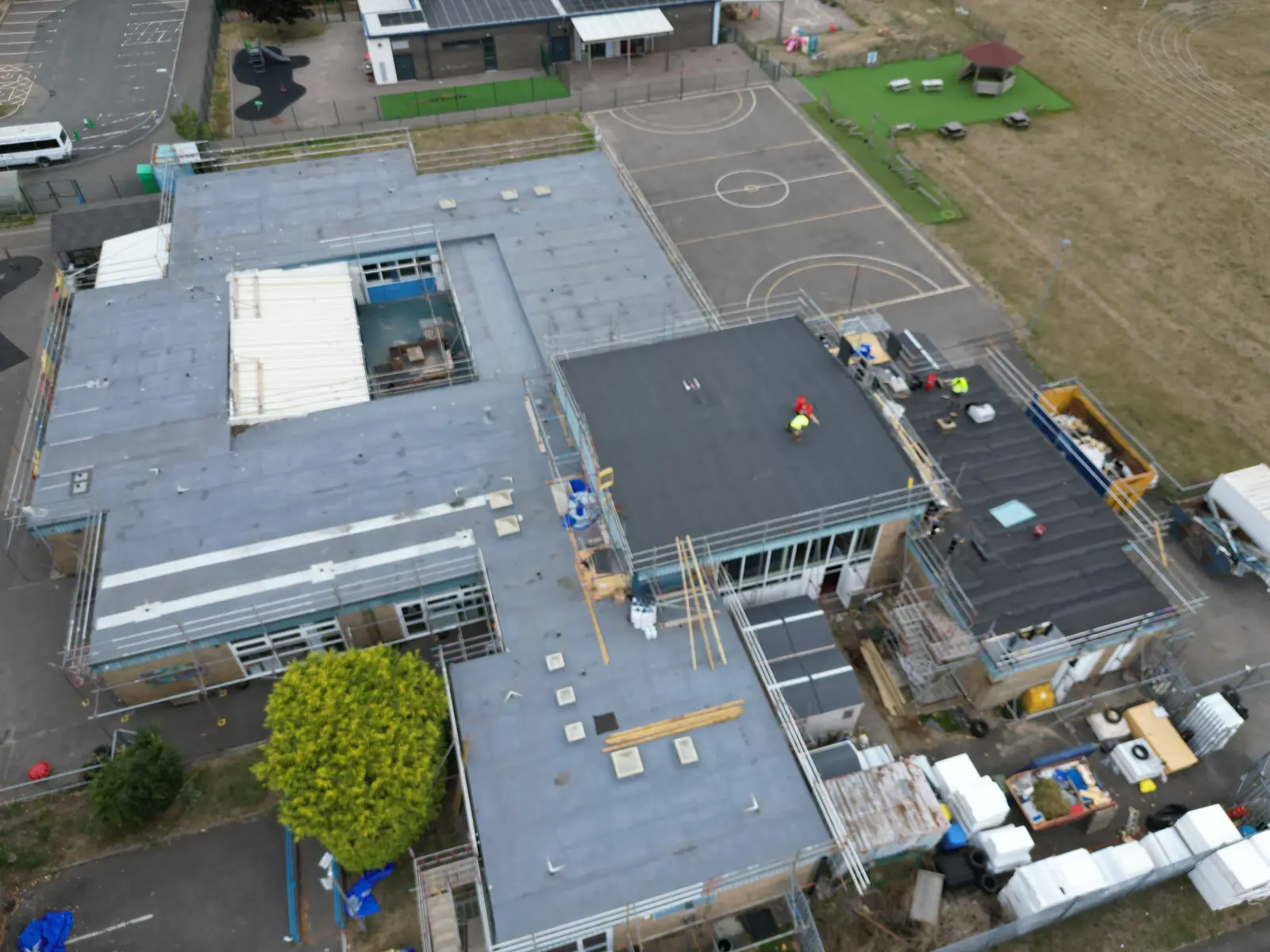
3. Term-time working with strict segregation, possible on some metal and flat roofs when the works can be fully isolated and noise/dust controlled. This requires careful design of temporary protection and site logistics.
The correct choice depends on roof size, system type, access, and the school's own calendar.
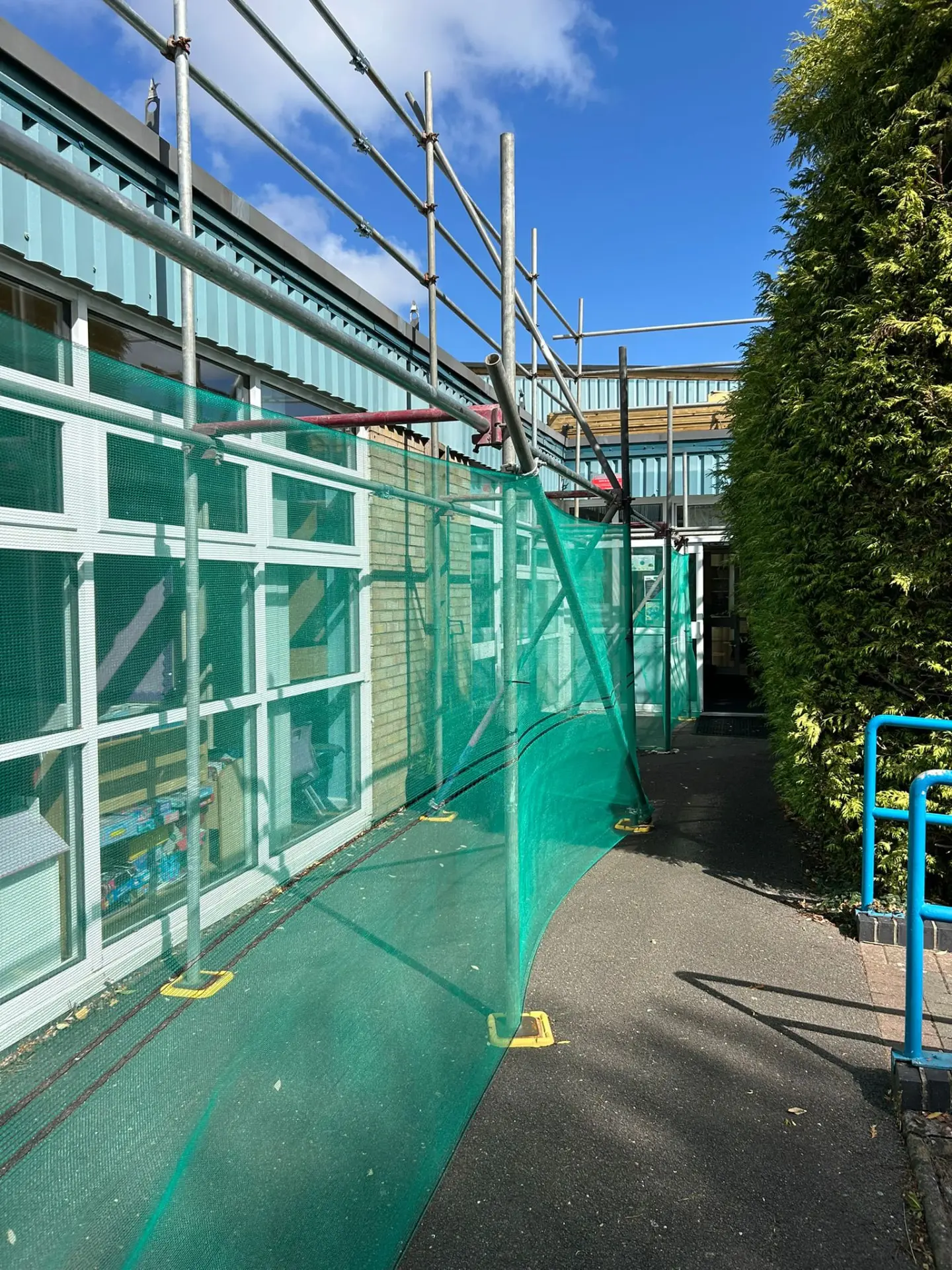
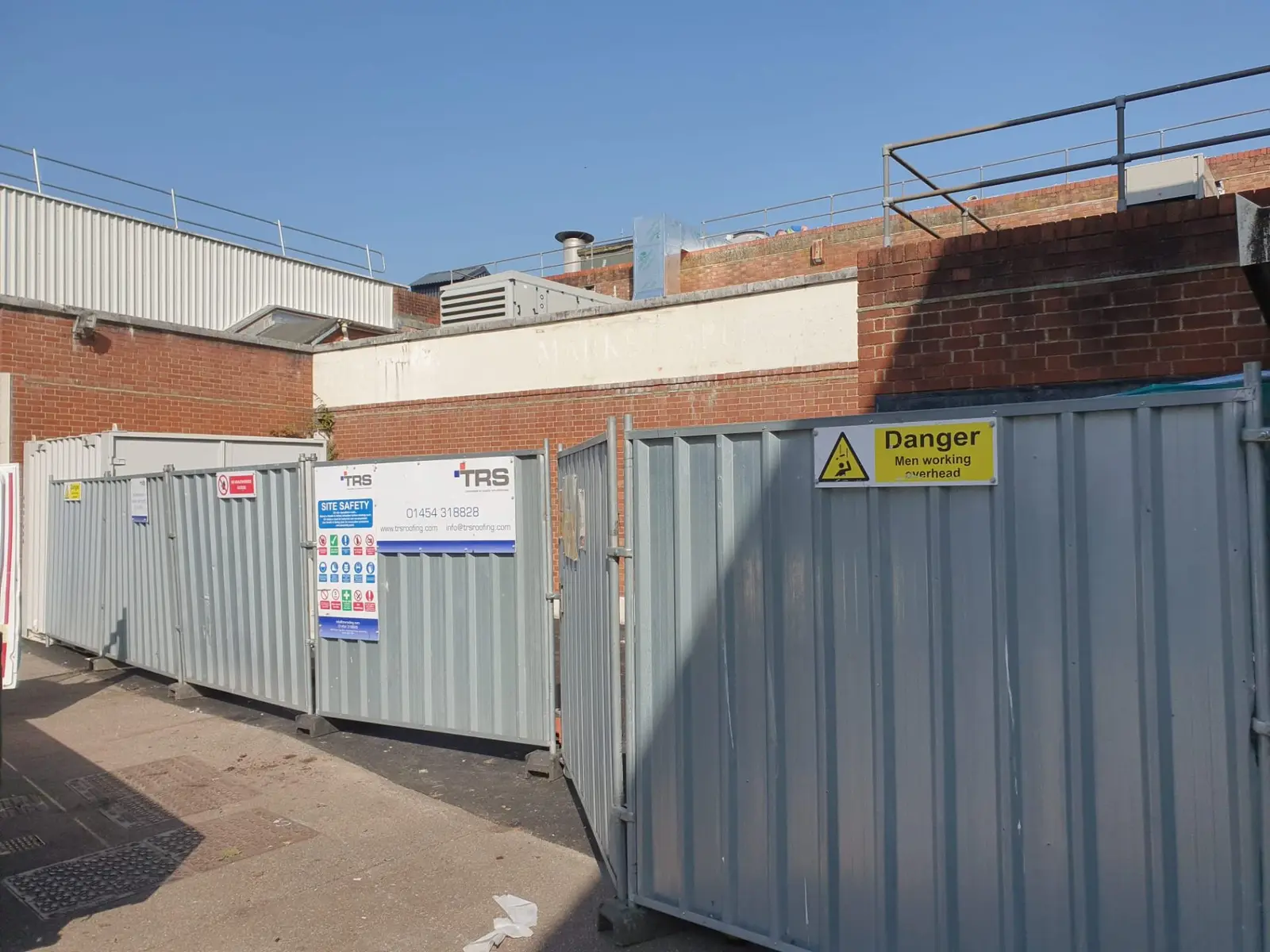
Secure hoarding or fencing that completely separates the works zone
Controlled scaffold and material storage areas
Clear rules on contractor movement during the school day
Enhanced DBS certification for the personnel on site, as agreed with the school
These measures need space and planning. They should be designed into the temporary works package rather than added as an afterthought.
What a good early survey should capture
In addition to the usual roof condition information, a school survey should specifically record:
Available summer-holiday windows and any fixed exam or event dates
Preferred or mandatory access routes
Areas that cannot be closed under any circumstances
Existing safeguarding or site rules the contractor will have to follow
Storage and compound constraints
This information allows the roofing solution and the delivery method to be developed together.
Conclusion
Keeping a school open during roof works is achievable, but only when the operational and safeguarding constraints are treated as design inputs rather than problems to be solved later.
Early, detailed information on phasing possibilities, access, and the school calendar allows surveyors and estates teams to specify a solution that is both technically sound and deliverable.
At TRS we regularly work with school clients and their surveyors to turn these constraints into a practical, cost-aware programme.
If you would like a second opinion on a school roof condition or a proposed programme, feel free to get in touch.