Overlay or strip on commercial flat roofs: how to decide
How to weigh an overlay against a full strip on a commercial flat roof, and what each option means for the guarantee, the build-up and whole-life risk.
When a commercial flat roof is approaching the end of its serviceable life, the first question is almost always the same: can we overlay, or do we need to strip back to the deck?
Budget pressure naturally pushes clients toward the lower-cost overlay option. At the same time, no one wants a short-life repair that fails within a few years or, worse, voids the manufacturer’s guarantee.
As a specialist commercial roofing contractor, we regularly help clients and their surveyors work through this decision. This article sets out the practical factors that determine when an overlay is a sound, guarantee-backed solution and when a full strip is the only reliable route.
What “overlay” actually means
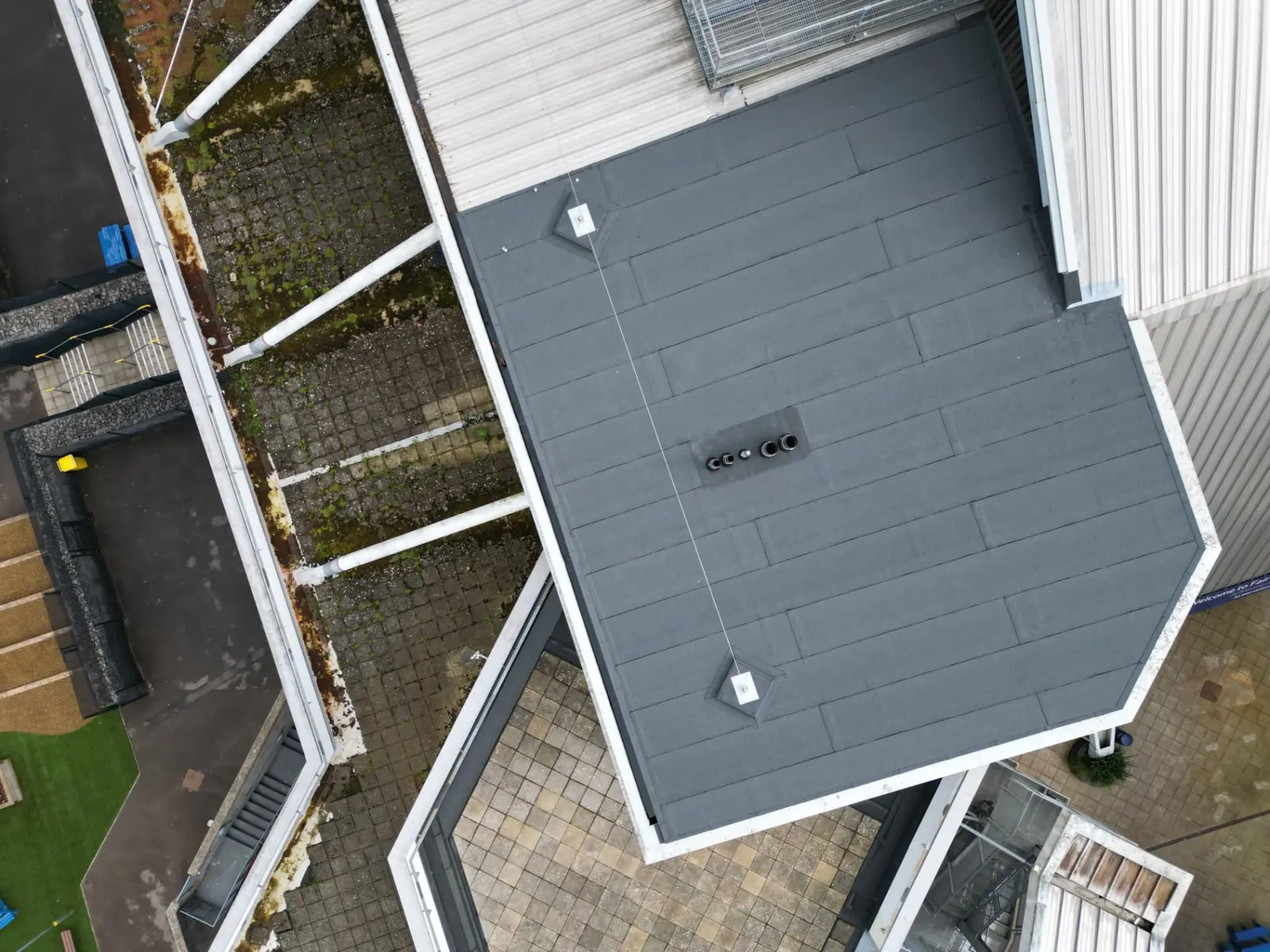
An overlay means installing a new waterproofing system directly over the existing roof covering, leaving the old membrane and insulation in place.
Manufacturers offer specific overlay systems for this purpose. For example, single-layer bituminous membranes designed to recover existing felt or asphalt, or liquid-applied systems that can be installed over a prepared existing surface. These systems can carry full manufacturer guarantees, but only when the existing roof meets the manufacturer’s published conditions.
When an overlay is usually acceptable
An overlay can be a robust long-term solution when all of the following are true:
The existing waterproofing is still essentially intact and well bonded to the substrate.
There is no significant trapped moisture within the existing build-up.
The structural deck and existing insulation have adequate residual capacity for the additional load.
Falls and drainage are still functioning, or can be improved as part of the overlay.
The number of existing layers is within the limit allowed by the chosen manufacturer and any relevant guidance.
The manufacturer of the new system has approved the existing roof as a suitable substrate for their overlay specification.
When these conditions are met, an overlay can deliver a full system guarantee, reduce cost and waste, and keep the building weathertight throughout the works.
When a full strip is normally required
A full strip back to the deck (or to a sound structural substrate) is the safer and often the only guarantee-compliant option when:
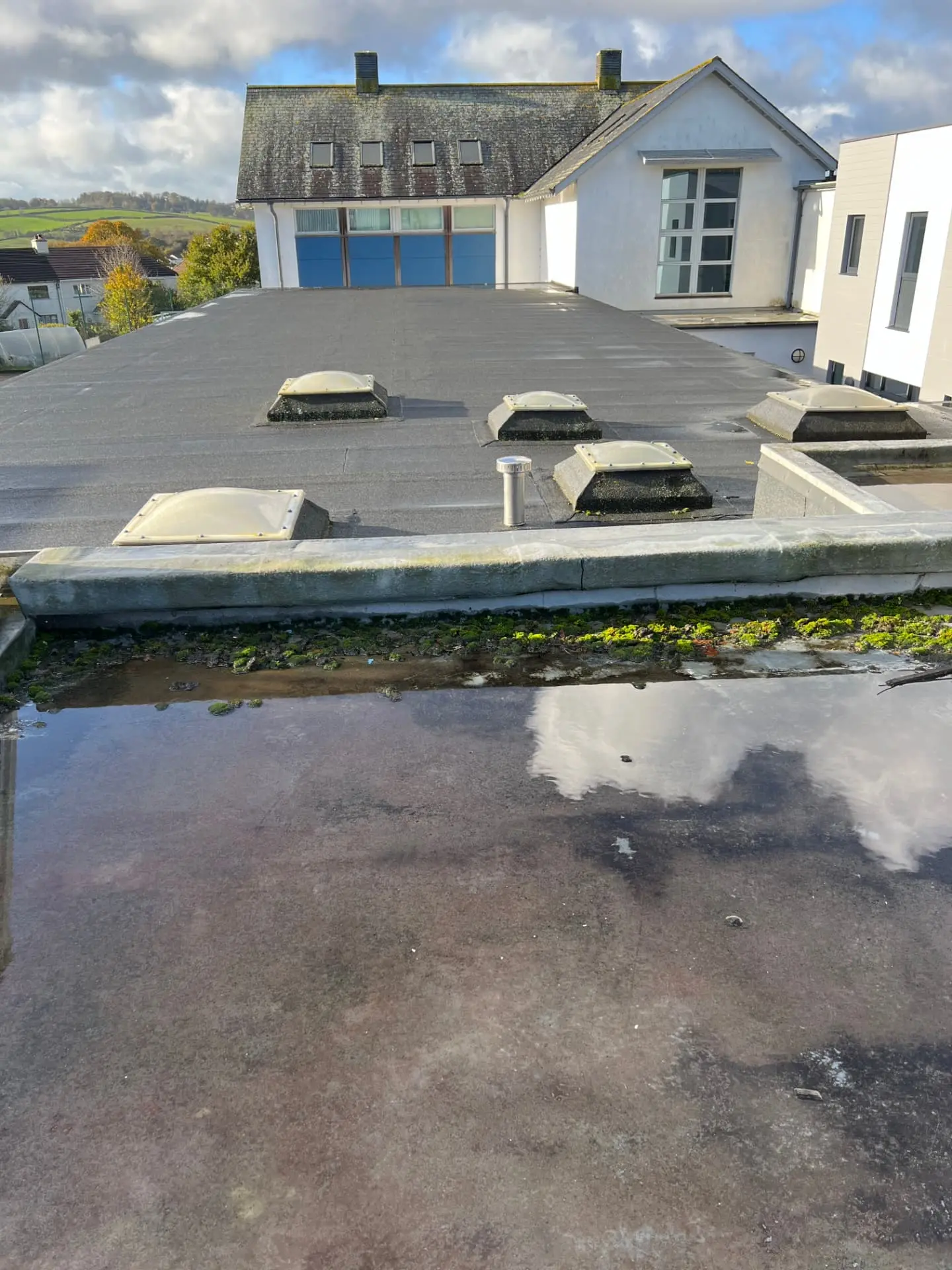
Moisture mapping or core samples show significant trapped water in the existing insulation or membrane.
The existing waterproofing has lost adhesion over large areas or has already been overlaid multiple times.
The deck itself is wet, degraded or structurally compromised.
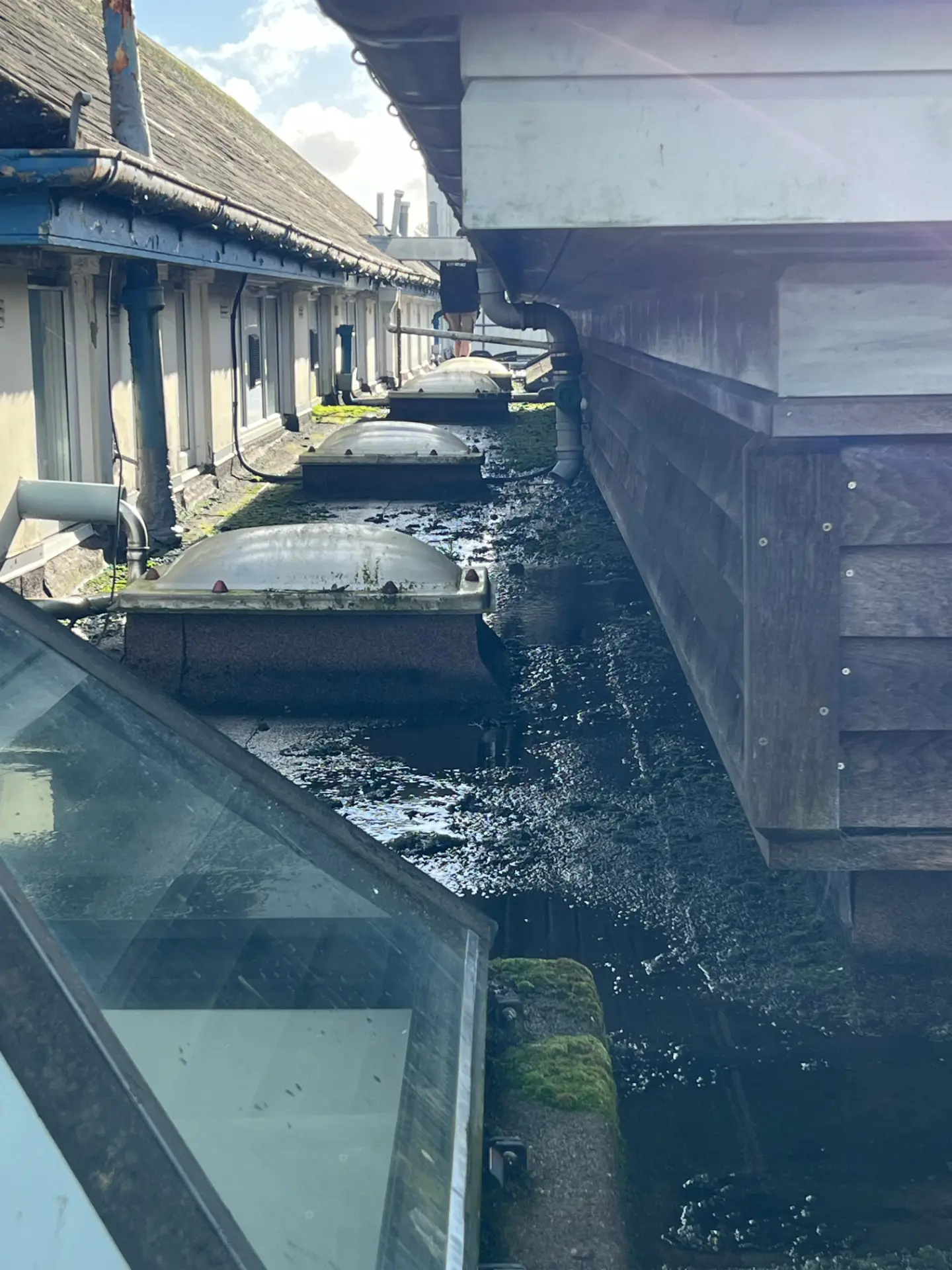
Falls are inadequate and cannot be corrected without removing the existing build-up.
The proposed new system cannot be guaranteed by the manufacturer over the existing construction.
Previous repairs have created a patchwork of incompatible materials.
Installing a new membrane over a wet or unstable substrate is one of the quickest ways to compromise both performance and the guarantee.
The guarantee is the deciding factor
Most reputable manufacturers will only issue a full system guarantee on an overlay when their specific conditions have been met. These usually include:
A detailed survey confirming the condition of the existing roof.
Moisture content within acceptable limits (often verified by core samples or electronic mapping).
Correct preparation of the existing surface.
Use of an approved overlay system installed by a trained contractor.
Compliance with the manufacturer’s detailing requirements at upstands, outlets and penetrations.
If any of these conditions are not satisfied, the manufacturer may refuse to guarantee the installation, or may only offer a reduced product-only warranty. In practical terms this means the client carries far more risk if problems arise later.
Budget pressure versus whole-life risk
An overlay almost always looks cheaper at tender stage. The saving comes from avoiding strip-out labour, disposal costs and the longer programme of a full replacement.
However, if the overlay is installed over hidden moisture or a failing substrate, the client can face repeated repairs, disruption, and ultimately a full strip within a much shorter period. The apparent saving disappears and the total cost rises.
A clear, evidence-based survey allows the real whole-life cost and risk of both options to be compared, rather than simply choosing the lowest initial price.
What a good early survey must establish
Before any decision is made, the roof survey should specifically record:
Condition and adhesion of the existing waterproofing
Presence and extent of moisture within the build-up (using moisture mapping and confirmatory core samples where necessary)
Number of existing layers and their compatibility
Structural capacity of the deck for any additional load
Current falls, drainage performance and outlet condition
Condition of upstands, penetrations and previous repairs
Manufacturer requirements for the proposed overlay system
Only with this information can a recommendation be made that protects both the building and the guarantee. Book a roof survey if you need this evidence gathered.
Conclusion
Overlaying a commercial flat roof can be an excellent, guarantee-backed solution when the existing roof is dry, well bonded and structurally capable of accepting the new system. It reduces cost, waste and disruption.
It is not a universal answer. Where moisture is present, adhesion has been lost, or the manufacturer will not guarantee the overlay, a full strip remains the only reliable long-term route.
The difference between a successful overlay and a short-life repair that compromises the guarantee is almost always the quality of the early survey and the honesty of the subsequent recommendation.
At TRS we regularly help commercial clients and their surveyors work through this decision with clear technical evidence, realistic cost comparisons, and manufacturer-compliant specifications.
If you would like a second opinion on whether an existing commercial flat roof is suitable for overlay or requires a full strip, feel free to get in touch or book a roof survey.