When can an industrial metal roof be overclad instead of stripped?
What a survey needs to establish before overcladding an industrial metal roof: purlin centres, added weight, wind loading, gutters and future solar loads.
Metal RoofingBy TRS RoofingPublished 27 Jul 2026Updated 13 Sept 20267 min read
Download this article. A practical look at the technical factors that determine whether overcladding is a sound long-term option on industrial metal roofs.
On many industrial buildings the existing metal roof is still keeping the weather out, yet it is clearly approaching the end of its serviceable life. Cut-edge corrosion, failed fixings, degraded coatings and rising maintenance costs all signal that action is needed.
The question that almost always follows is whether the roof can be overclad or whether a full strip-and-replace is required. The desire to avoid the cost, disruption and production impact of a full strip-out is understandable. At the same time, no one wants a short-term solution that simply defers a larger problem.
As a specialist commercial and industrial roofing contractor, we regularly help clients and their surveyors decide which route is genuinely viable. This article sets out the practical and technical factors that determine when overcladding is a sound long-term option, and why a thorough survey is essential before that decision is made.
What overcladding actually involves
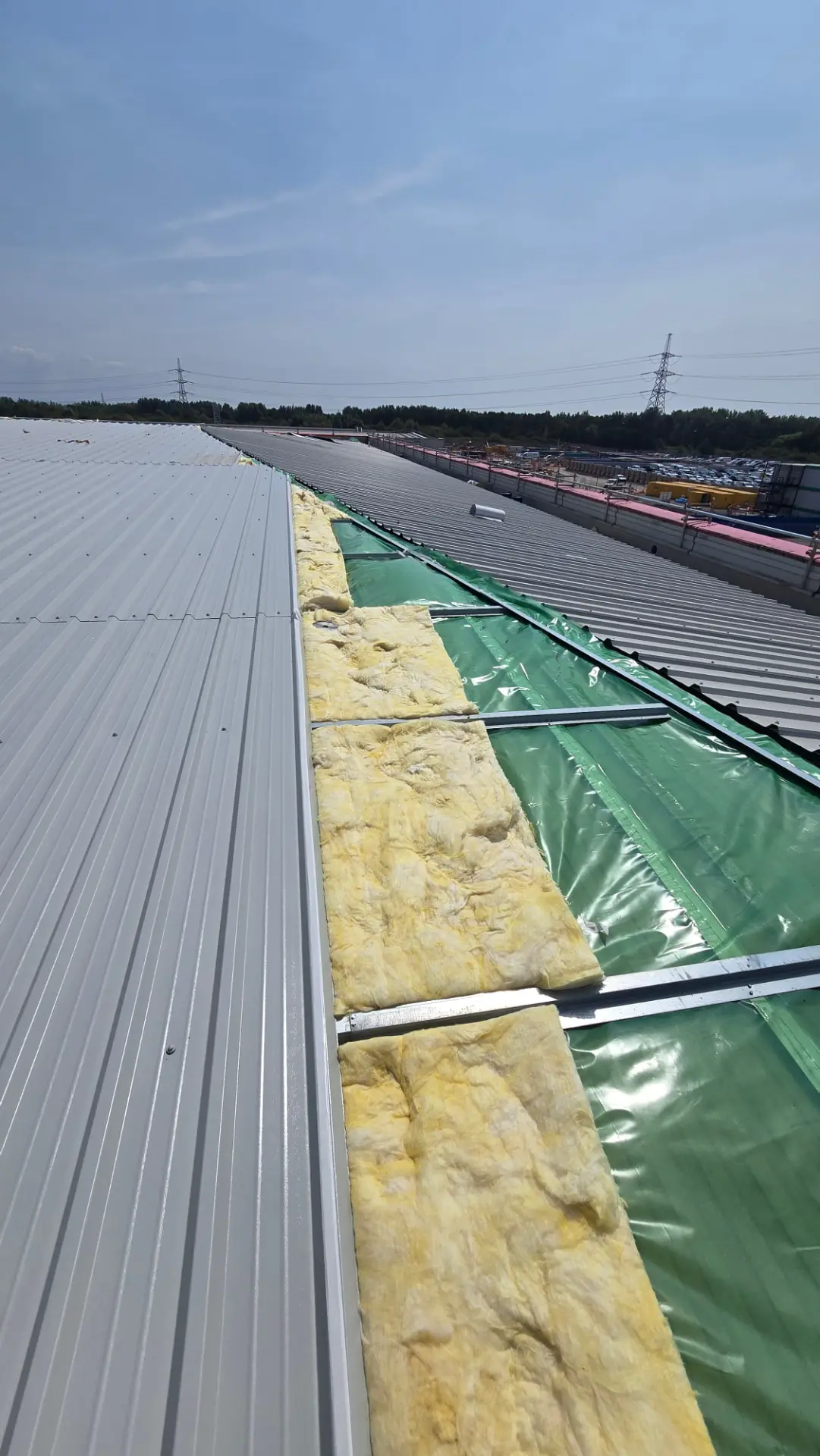
Overcladding means installing a new metal roof system over the top of the existing sheets. The existing roof remains in place and acts as a deck. A new structural spacer system, insulation and outer weather sheet are fixed through to the existing purlins or sheeting rails.
When it is detailed and installed correctly, the result is a new roof with improved thermal performance and a design life comparable to a full replacement, all while the building stays weathertight throughout the works.
When overcladding is usually suitable
Overcladding is most likely to be a robust long-term solution when:
The existing structure has adequate residual capacity to carry the additional load of the new system, insulation, and potentially future solar PV.
The existing metal sheets are still securely fixed and are not suffering from widespread structural corrosion.
There is sufficient height and clearance at eaves, ridges, valleys, gutters and abutments.
Penetrations, rooflights and interfaces can be properly weathered.
Purlin centres, purlin type and condition are suitable for the proposed fixing pattern and loads
When overcladding is usually not the right choice
Overcladding should normally be avoided when:
The existing sheets or fixings have lost significant structural integrity.
There is extensive cut-edge corrosion that has progressed into the main body of the sheets.
Purlins (steel or concrete) are undersized, heavily corroded, or spaced too widely for the new system.
Existing gutters cannot accept a liner or the required upstand details.
The geometry is too complex or the available height is insufficient.
Asbestos-containing materials make leaving the existing sheets in place undesirable.
Why a proper survey is non-negotiable
A visual walkover is never enough to decide between overcladding and stripping. The following technical points must be established before any recommendation is made:
Purlin centres and purlin type
Purlin spacing and type directly affect whether the new system can be fixed safely and whether the existing structure can carry the extra load. Steel purlins at wider centres may need additional support or a different spacer system. Concrete purlins require particular care, their condition, reinforcement cover and ability to accept new fixings must be checked. Incorrect assumptions about purlin centres are one of the most common reasons overclad schemes later run into structural or fixing problems.
Existing versus proposed weights
The weight of the existing roof build-up must be compared with the weight of the proposed overclad system. Both dead load and imposed load need to be considered. Without accurate figures it is impossible to confirm that the primary and secondary structure remain within safe limits.
Wind loading calculations
Any new roof system must be designed for the wind loads applicable to the site. This requires proper calculation, not rules of thumb. The fixing pattern, spacer system and edge details all depend on these figures. A survey that does not feed into wind-load design leaves a critical gap.
Gutter liners and drainage interfaces
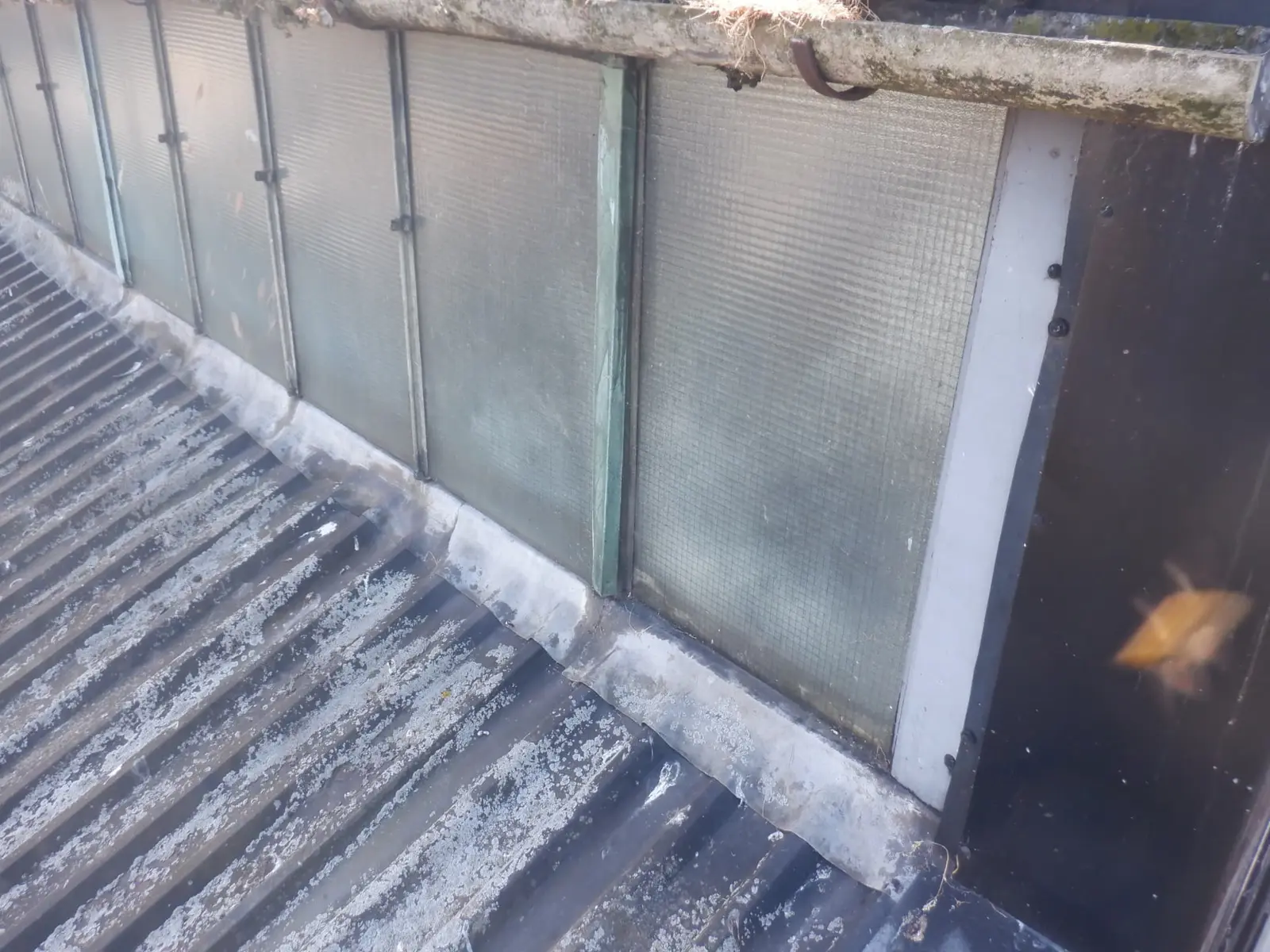
Many industrial roofs rely on valley or boundary gutters that were never designed for an overclad build-up. A gutter liner is often required, together with revised upstands and outlets. If the existing gutters cannot accommodate these details, the overclad option may become impractical or disproportionately expensive.
Loading out the roof correctly
Materials and plant must be distributed so that local overloading of purlins or sheets is avoided during installation. A good survey identifies safe loading-out zones and any restrictions on plant access. This is especially important on older industrial buildings where the existing roof may already be close to its capacity.
Potential for solar PV
If solar is a current or future requirement, the overclad design must allow for the additional load and the fixing of the PV system. Leaving this consideration until later often forces expensive redesign or limits the size of the array that can be installed.
Phasing and production continuity
Even when overcladding is technically suitable, the works still need to be phased around production. A thorough survey records operational constraints, preferred working windows, access routes and any areas that cannot be disturbed. This information turns a technical solution into a deliverable programme.
What a good early survey should capture
In addition to the usual roof condition information, an industrial metal-roof survey that is intended to inform an overclad-versus-strip decision should specifically record:
Purlin type, centres, condition and residual capacity
Existing roof weight and proposed new system weight
Wind-load design parameters for the site
Condition and capacity of existing gutters and the feasibility of liners
Available height at eaves, ridges, valleys and penetrations
Safe loading-out areas and plant access restrictions
Any current or future solar PV requirements
Operational constraints and preferred phasing windows
Only with this level of information can a clear, defensible recommendation be made. Our roof surveys are structured to capture exactly this evidence, and you can book a roof survey directly.
Conclusion
Overcladding an industrial metal roof can be an excellent long-term solution when the structure, purlins, sheets and interfaces are still capable of supporting a new system. It offers lower disruption to production and avoids the cost and waste of a full strip-out.
It is not a universal answer. Where purlin centres are too wide, concrete purlins are in poor condition, wind loads cannot be satisfied, or gutter details cannot be resolved, a full strip-and-replace remains the more reliable route.
The difference between a successful overclad and an expensive short-term fix is almost always the quality of the early survey. Checking purlin centres and type, existing and proposed weights, wind loading, gutter liners, loading-out restrictions and future solar potential is not optional detail, it is the foundation of a safe and durable decision.
At TRS we regularly help industrial clients and their surveyors work through this decision with clear technical evidence and realistic programme and cost information.
If you would like a second opinion on whether an existing industrial metal roof is suitable for overcladding, feel free to get in touch or book a roof survey.